
GHK-Cu
Price range: $53.00 through $65.00
- Ships same day on orders placed by 3pm ET. Most US orders arrive in 2–4 days.
- Free shipment protection on every order
- Third-party tested · CoA on file
- Discreet, tracked shipping
- Free shipping over $200
- Members earn 5% back in store credit
What is GHK-Cu?
GHK-Cu (glycyl-L-histidyl-L-lysine copper) is a naturally occurring tripeptide-copper complex first isolated from human plasma by Pickart and Thaler in 1973. The tripeptide GHK has a strong affinity for copper(II) ions, forming a 1:1 complex that is the biologically active form. GHK-Cu is present in plasma, saliva, and urine, with plasma levels declining with age. It has been one of the most extensively studied copper peptides in dermatological and wound biology research, with over 100 published studies examining its effects on extracellular matrix remodeling, collagen synthesis, and tissue signaling. GHK-Cu modulates the expression of a large number of human genes — studies using gene expression microarrays have identified over 4,000 genes whose expression is influenced by GHK-Cu, with effects spanning multiple functional categories including tissue remodeling, antioxidant defense, and growth factor signaling.
Mechanism of Action
GHK-Cu has been investigated for its role as a gene expression modulator and copper delivery vehicle. Researchers observed that GHK-Cu influences expression of over 4,000 human genes based on microarray studies, with significant effects on genes involved in collagen synthesis, metalloproteinase regulation, antioxidant defense (SOD, glutathione), and growth factor signaling (TGF-β, VEGF, FGF). Studies suggest that the copper(II) ion is essential for biological activity, as the apo-peptide (GHK without copper) shows reduced activity. The copper delivery function may influence copper-dependent enzymes including lysyl oxidase (collagen crosslinking), superoxide dismutase, and cytochrome c oxidase. In fibroblast models, researchers observed that GHK-Cu is associated with increased collagen type I and III synthesis, fibronectin production, and glycosaminoglycan deposition. The peptide has also been investigated for its effects on metalloproteinase balance, simultaneously upregulating tissue-repair MMPs while modulating TIMP expression.
Published Research
Gene Expression Profiling
Pickart et al. (2012) conducted comprehensive gene expression analysis of GHK-Cu-treated human fibroblasts, identifying over 4,000 genes modulated by the peptide-copper complex. The data revealed broad effects on tissue remodeling, antioxidant, and anti-inflammatory gene networks [1].
Collagen and ECM Remodeling
Maquart et al. (1999) investigated GHK-Cu in wound biology models and observed that the complex was associated with increased collagen synthesis, glycosaminoglycan production, and dermal fibroblast migration. The study established the extracellular matrix remodeling profile of GHK-Cu [2].
Discovery and Characterization
Pickart and Thaler (1973) first isolated GHK from human plasma and characterized its copper-binding properties. This foundational work identified the tripeptide as a naturally occurring copper transport molecule whose plasma levels change with age [3].
Product Specifications
| Product | GHK-Cu Lyophilized Powder |
|---|---|
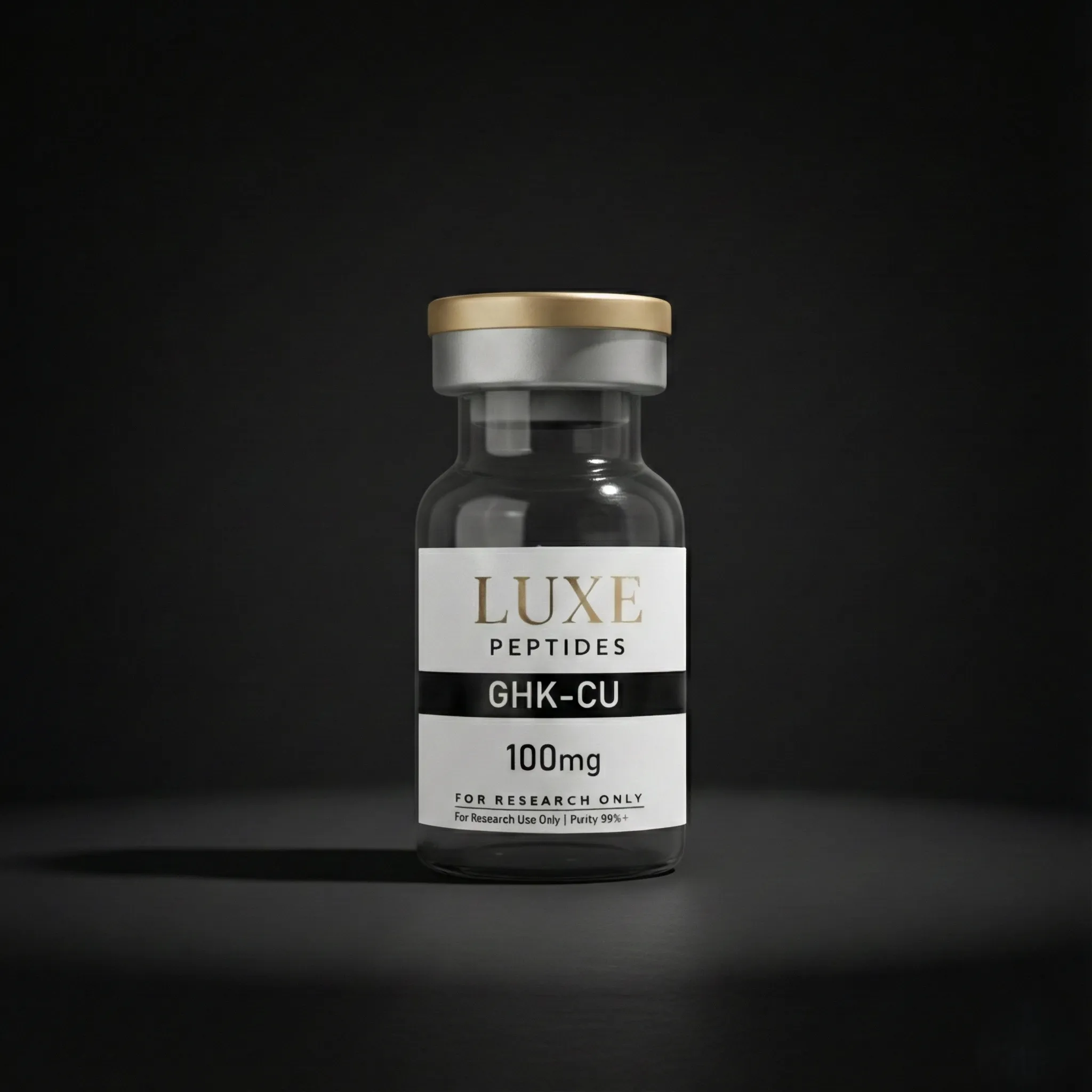
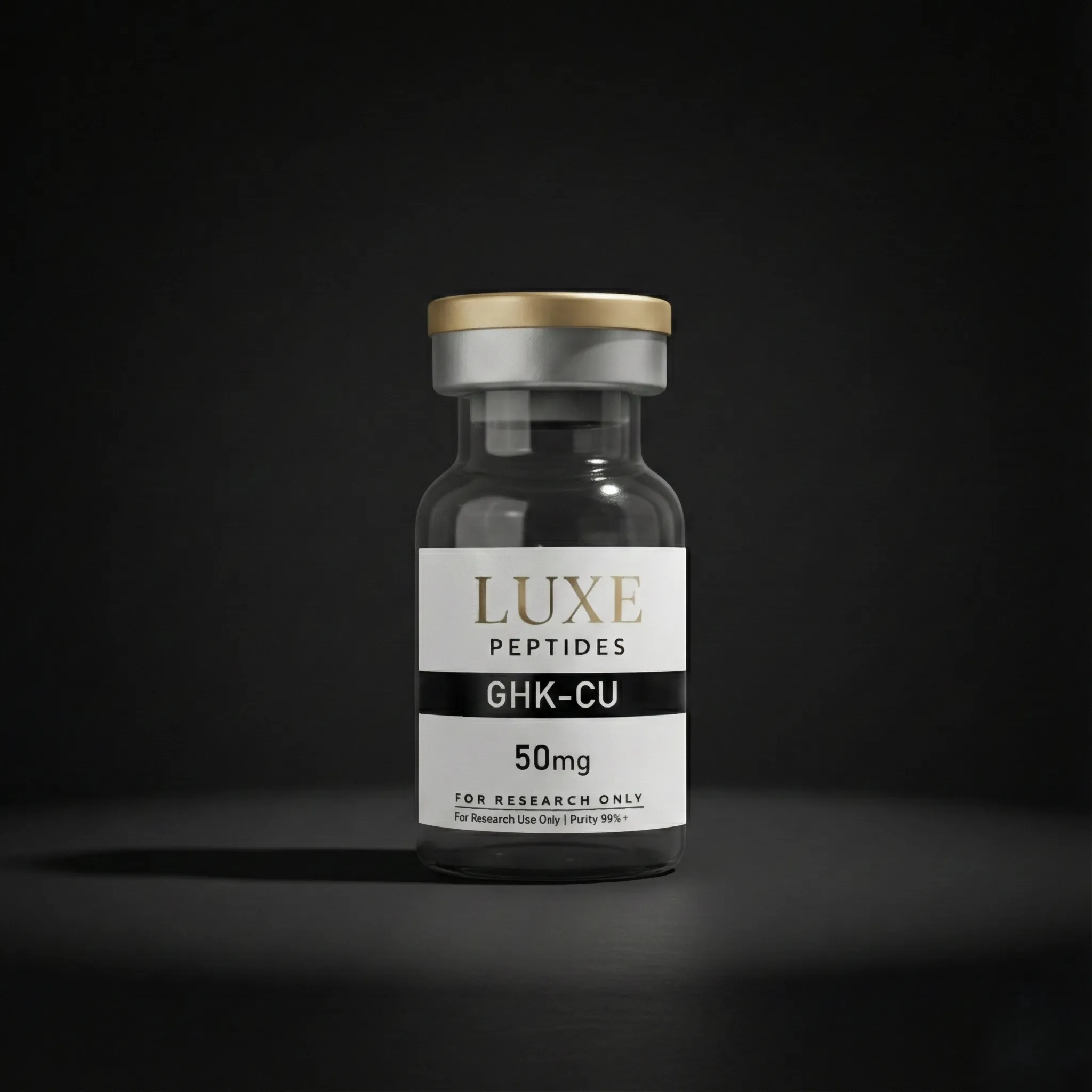
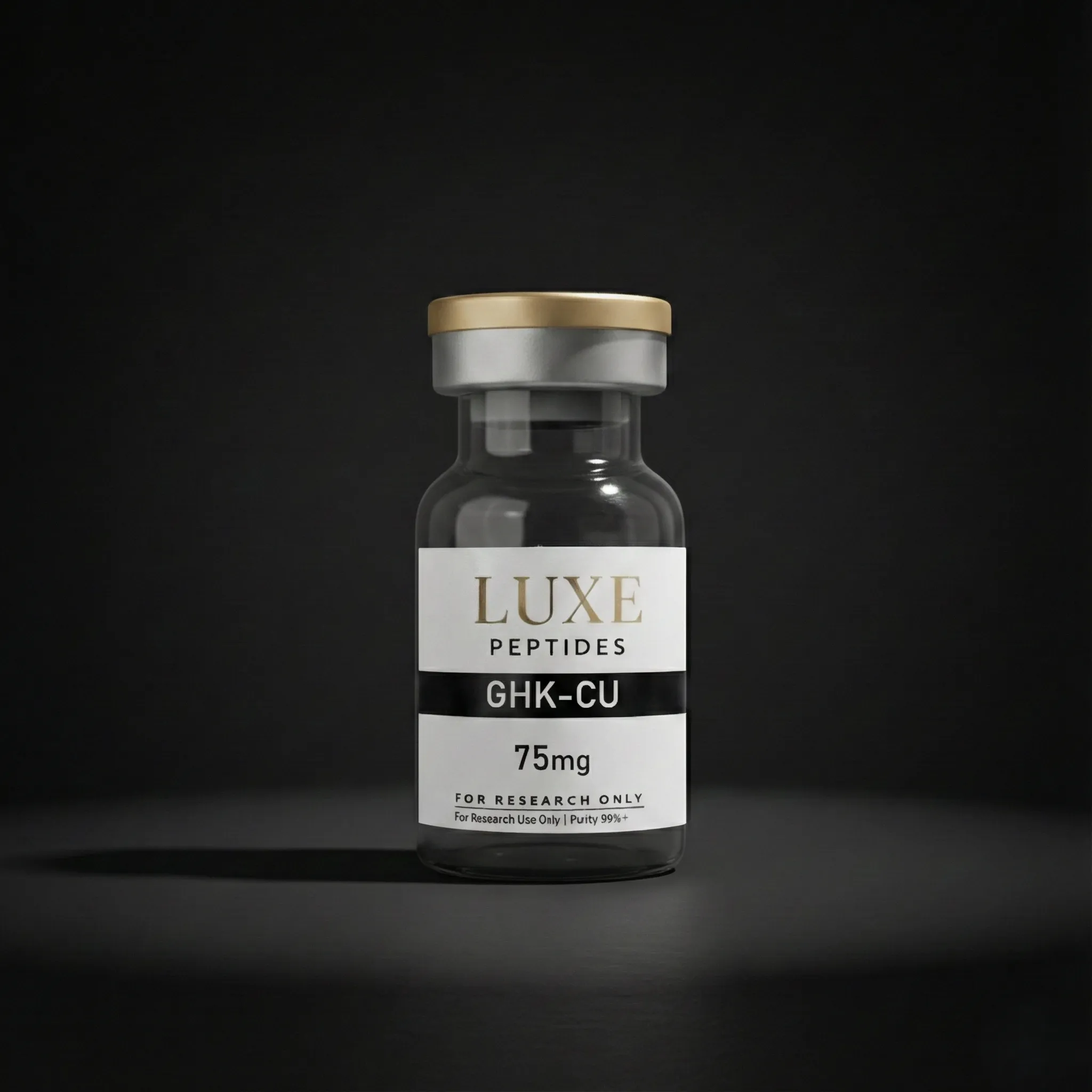
| Available Sizes | 50mg, 100mg |
| Purity | ≥99% (HPLC verified) |
| CAS Number | 89030-95-5 |
| Sequence | Gly-His-Lys:Cu²⁺ |
| Molecular Formula | C₁₄H₂₂CuN₆O₄ |
| Molecular Weight | 401.91 g/mol |
| Appearance | White lyophilized powder in glass vial |
| Storage | Store lyophilized at -20°C protected from light. Reconstituted solution at 2-8°C, use within 14 days. |
| Testing | Third-party tested — Certificate of Analysis available |
Storage & Stability
Store lyophilized at -20°C protected from light. Reconstituted solution at 2-8°C, use within 14 days.
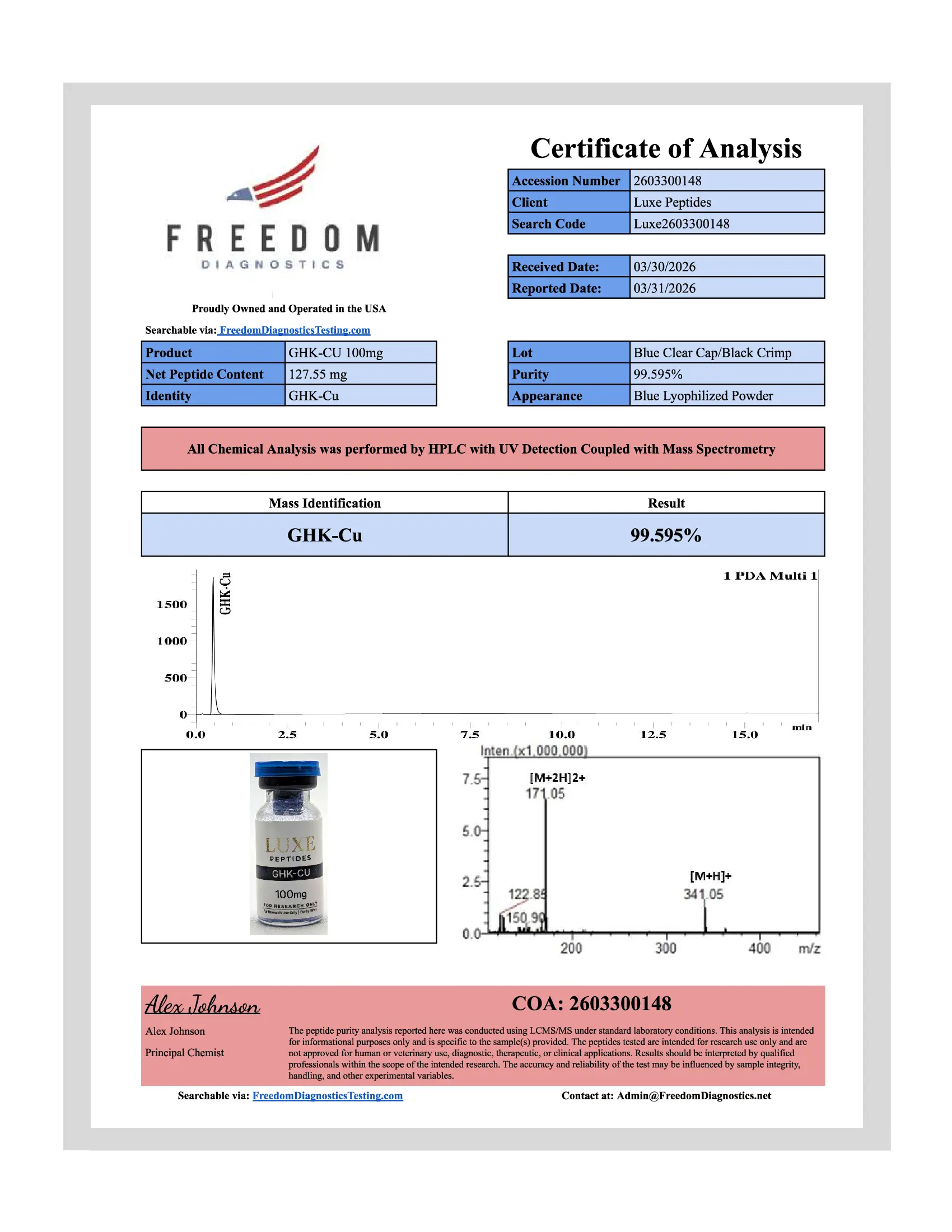
Certificate of Analysis
| Purity (HPLC-UV / MS) | 99.595% | Pass |
| Identity (Mass Spec) | GHK-Cu | Confirmed |
| Net Peptide Content | 127.55 mg | Reported |
| Appearance | White Lyophilized Powder | Pass |
Certificates of Analysis — Janoshik
Third-party tested · Independent analytical lab
| Tested | Measured | Purity |
|---|---|---|
| May 2026 | 55.81mg | 99.71% |
| May 2026 | 57.46mg | 99.52% |
| May 2026 | 56.00mg | 99.61% |
| Apr 2026 | 60.72mg | 99.77% |
| Mar 2026 | 61.87mg | 99.84% |
| Mar 2026 | 60.04mg | 99.78% |
| Feb 2026 | 63.03mg | 99.70% |
| Jan 2026 | 57.32mg | 99.74% |
| Jan 2026 | 60.14mg | 99.69% |
| Dec 2025 | 59.23mg | 99.68% |
Latest safety testing
- Heavy metals
- As/Cd/Pb not detected Feb 2026
- Endotoxin
- 0.234 EU/vial Feb 2026
| Tested | Measured | Purity |
|---|---|---|
| Jun 2026 | 108.95mg | 99.91% |
| Jun 2026 | 111.29mg | 99.76% |
| Jun 2026 | 106.06mg | 99.76% |
| May 2026 | 106.74mg | 99.74% |
| May 2026 | 104.33mg | 99.44% |
| Apr 2026 | 104.26mg | 99.63% |
| Apr 2026 | 92.61mg | 99.45% |
| Apr 2026 | 116.68mg | 99.76% |
| Apr 2026 | 117.16mg | 99.77% |
| Mar 2026 | 115.93mg | 99.83% |
Latest safety testing
- Heavy metals
- As/Cd/Pb not detected Feb 2026
- Endotoxin
- <0.01 EU/vial Feb 2026
Endotoxin, sterility, and heavy-metals reports are run on individual lots on a rotating basis, separate from the identity/purity assay above — not on every lot.
Frequently Asked Questions
GHK-Cu is a naturally occurring tripeptide-copper complex (Gly-His-Lys:Cuu00b2u207a) first isolated from human plasma. It modulates expression of thousands of genes involved in tissue remodeling and signaling.
The CAS registry number for GHK-Cu is 89030-95-5.
Yes, the copper(II) ion is critical for GHK-Cu's biological activity. The apo-peptide (GHK without copper) shows significantly reduced activity in most research models.
Store lyophilized GHK-Cu at -20°C protected from light. Once reconstituted, store at 2-8°C and use within 14 days.
Microarray studies have identified over 4,000 human genes whose expression is modulated by GHK-Cu, spanning tissue remodeling, antioxidant defense, and growth factor signaling categories.
Yes, GHK-Cu is found naturally in human plasma, saliva, and urine. Plasma levels of GHK-Cu decline with age.
References
Pickart L, et al. GHK peptide as a natural modulator of multiple cellular pathways in skin regeneration. Biomed Res Int. 2015;2015:648108. PMID: 25866791
View sourceMaquart FX, et al. Stimulation of collagen synthesis in fibroblast cultures by the tripeptide-copper complex glycyl-L-histidyl-L-lysine-Cu2+. FEBS Lett. 1999;238(2):343-346. PMID: 3169264
View sourcePickart L, Thaler MM. Tripeptide in human serum which prolongs survival of normal liver cells and stimulates growth in neoplastic liver. Nat New Biol. 1973;243(124):85-87. PMID: 4512654
View source
Customer Reviews
Verified purity matches the COA. Excellent.
Solid product quality. COA checks out perfectly.
Purity exceeded expectations. Prompt delivery too.
Professional packaging, fast delivery, great product.
Fast shipping, well-packaged. Product quality is top-notch.
Impressed with the quality. Packaging was professional.
Verified purity matches the COA. Excellent.
Impressed with the quality. Packaging was professional.
Quick delivery and the quality is consistently high.
Happy with the product. Packaging could be improved slightly.