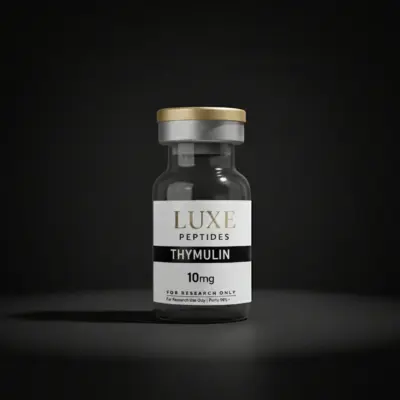
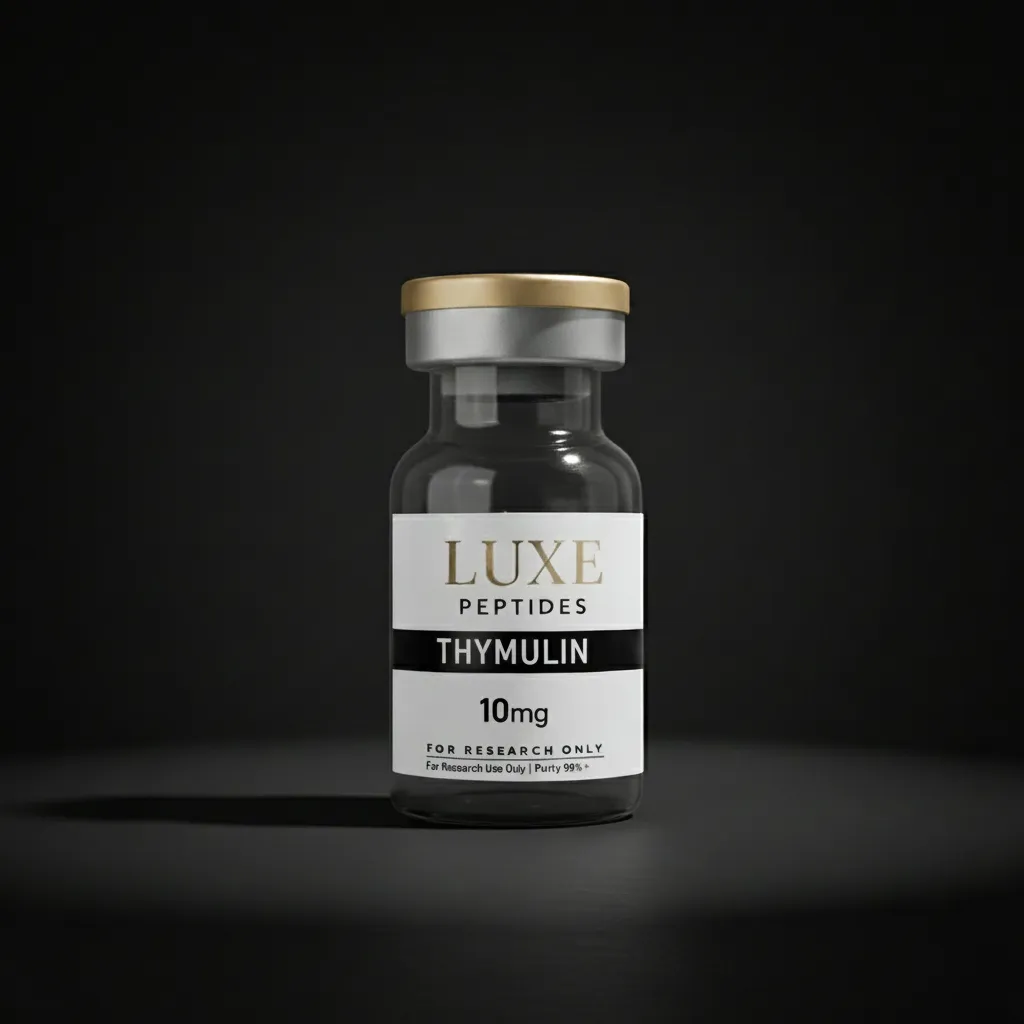
Thymulin
$40.00
What is Thymulin?
Thymulin (serum thymic factor/FTS) is a nonapeptide hormone produced exclusively by thymic epithelial cells, first isolated by Bach et al. in 1977. It is unique among thymic peptides in requiring zinc for biological activity — the active form is a 1:1 complex of the nonapeptide with zinc(II) ions. Thymulin is the only thymic hormone with a fully characterized endocrine pathway, with measurable serum levels that decline with age and thymic involution. The peptide promotes T-cell differentiation and maturation, particularly the transition from pre-T cells to mature T-cell subsets. Thymulin levels are regulated by zinc availability, making it a molecular link between zinc nutritional status and immune function. Circulating thymulin levels peak in childhood and progressively decline after puberty, paralleling thymic involution. The peptide has been investigated for its immunomodulatory, anti-inflammatory, and neuroendocrine signaling properties.
Mechanism of Action
Thymulin has been investigated for its effects on T-cell differentiation and neuroimmune signaling. The zinc-peptide complex binds to specific high-affinity receptors on T-cell precursors, promoting differentiation along CD4+ and CD8+ lineages. Researchers observed that thymulin enhances expression of T-cell markers (CD2, CD3, CD4, CD8) on thymocytes and peripheral T-cell precursors. Studies suggest that thymulin also modulates cytokine production by mature T cells, enhancing IL-2 secretion and IFN-γ production while modulating inflammatory cytokine responses. Beyond T-cell effects, researchers have investigated thymulin’s neuroendocrine signaling: the peptide modulates hypothalamic-pituitary axis function and has been detected in cerebrospinal fluid, suggesting central nervous system activity. The zinc requirement for activity is absolute — the apo-peptide (without zinc) is biologically inactive, and zinc supplementation can restore thymulin activity in zinc-deficient states.
Published Research
Discovery and Characterization
Bach et al. (1977) isolated and characterized thymulin (FTS) from thymic epithelial cell supernatants, establishing its zinc-dependent nonapeptide structure and T-cell differentiating activity [1].
Zinc Dependence
Dardenne et al. (1982) demonstrated that thymulin requires zinc for biological activity and that circulating thymulin levels are regulated by zinc nutritional status, linking trace mineral biology to thymic endocrinology [2].
Neuroendocrine Effects
Savino et al. (2007) reviewed thymulin’s neuroendocrine signaling properties, including its modulation of hypothalamic-pituitary function and anti-inflammatory effects in CNS models [3].
Product Specifications
| Product | Thymulin Lyophilized Powder |
|---|---|
| Available Sizes | 10mg |
| Purity | ≥99% (HPLC verified) |
| CAS Number | 63958-90-7 |
| Sequence | pGlu-Ala-Lys-Ser-Gln-Gly-Gly-Ser-Asn-Zn²⁺ |
| Molecular Formula | C₃₃H₅₂N₈O₁₂Zn |
| Molecular Weight | 825.21 g/mol |
| Appearance | White lyophilized powder in glass vial |
| Storage | Store lyophilized at -20°C. Reconstituted solution at 2-8°C, use within 14 days. |
| Testing | Third-party tested — Certificate of Analysis available |
Frequently Asked Questions
Thymulin is a zinc-dependent nonapeptide hormone produced by thymic epithelial cells. It promotes T-cell differentiation and is the only thymic hormone with a true endocrine profile.
The CAS registry number for Thymulin is 63958-90-7.
Zinc is essential for thymulin's biological activity. The apo-peptide without zinc is inactive. Zinc supplementation can restore thymulin function in deficient states.
Store lyophilized Thymulin at -20°C. Once reconstituted, store at 2-8°C and use within 14 days.
Thymulin is a zinc-dependent nonapeptide that promotes T-cell differentiation. Thymosin Alpha-1 is a 28-amino acid peptide that acts through TLR signaling. Different peptides, different mechanisms.
Yes, circulating thymulin levels peak in childhood and progressively decline after puberty, paralleling age-related thymic involution.
References
- Bach JF, et al. Evidence for a serum-factor secreted by the human thymus. Lancet. 1977;2(8040):1056-1058. PMID: 72957
- Dardenne M, et al. A zinc-dependent epitope on the molecule of thymulin, a thymic hormone. Proc Natl Acad Sci USA. 1982;79(17):5370-5373. PMID: 6957869
- Savino W, et al. Neuroendocrine control of thymus physiology. Endocr Rev. 2007;28(7):668-694. PMID: 17967928
Customer Reviews
Very pleased with this purchase. Will be a repeat customer.
Third order from Luxe — always reliable, always pure.
Good product overall. Shipping took a couple extra days.
Very pleased with this purchase. Will be a repeat customer.
Very pleased with this purchase. Will be a repeat customer.
Excellent purity. Lab results confirmed. Will order again.
Quick delivery and the quality is consistently high.
Really happy with this. Clean, pure, well-packaged.
Verified purity matches the COA. Excellent.
Purity exceeded expectations. Prompt delivery too.
Five stars earned. Quality speaks for itself.