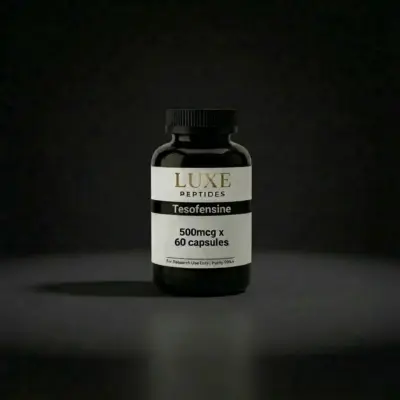
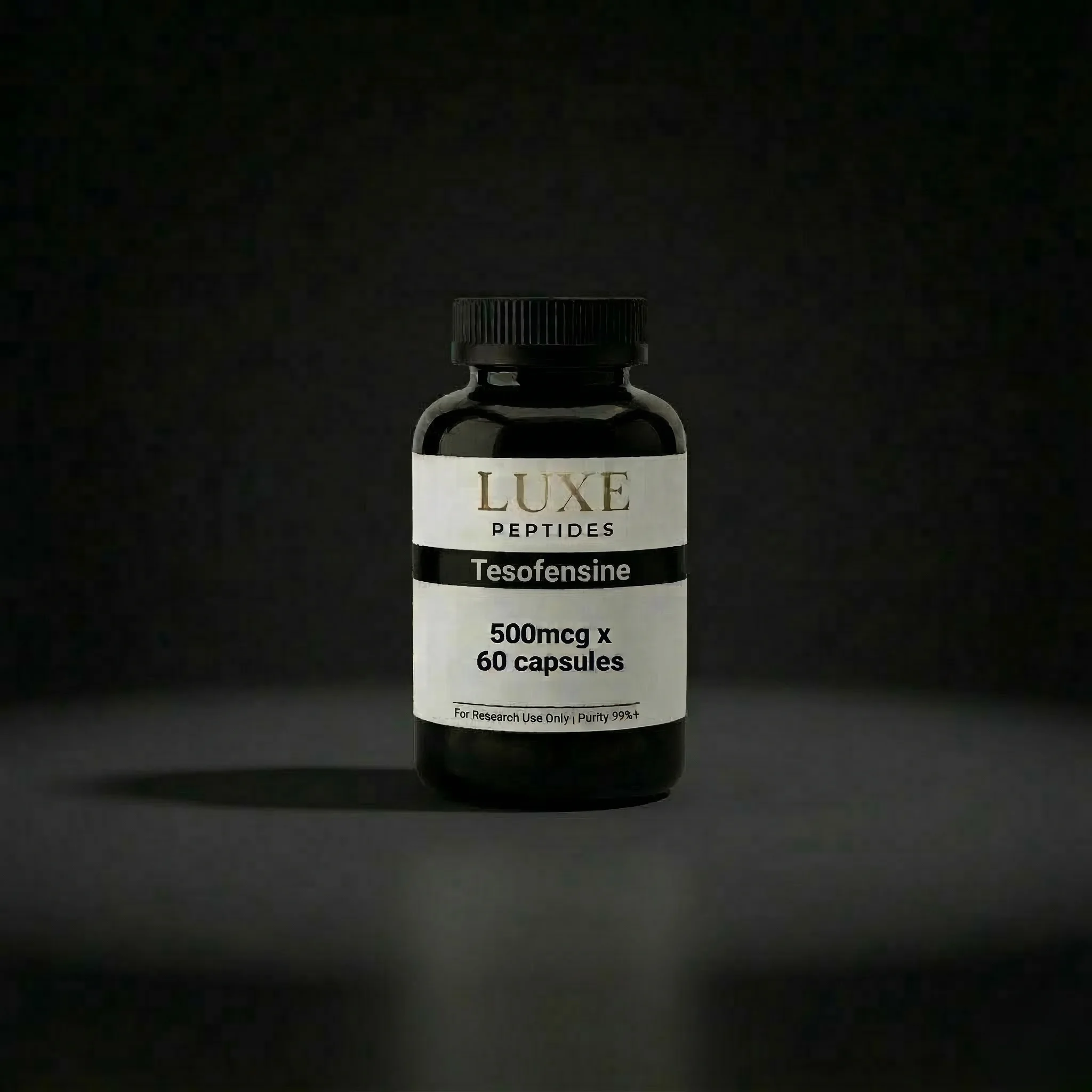
Tesofensine
$155.00
What is Tesofensine?
Tesofensine (NS2330) is a triple monoamine reuptake inhibitor that blocks the reuptake of norepinephrine, dopamine, and serotonin. Originally developed by NeuroSearch as a treatment for neurodegenerative diseases (Parkinson’s and Alzheimer’s), tesofensine was found during clinical trials to produce significant body weight changes as a side effect, redirecting its development toward metabolic research. The compound inhibits the dopamine transporter (DAT), norepinephrine transporter (NET), and serotonin transporter (SERT), increasing synaptic concentrations of all three monoamine neurotransmitters. This triple reuptake inhibition profile is distinct from most existing agents, which typically target one or two monoamine systems. Tesofensine has been investigated in Phase 2 and Phase 3 clinical trials for its effects on appetite, energy expenditure, and body composition. The combination of tesofensine with metoprolol (branded as Tesomet) has been investigated to mitigate cardiovascular effects of increased catecholamine signaling.
Mechanism of Action
Tesofensine has been investigated for its inhibition of monoamine reuptake transporters in the central nervous system. By blocking DAT, NET, and SERT, tesofensine increases synaptic concentrations of dopamine, norepinephrine, and serotonin in brain regions controlling appetite and energy balance. Researchers observed that enhanced dopaminergic signaling in the mesolimbic reward system modulates food reward and motivation to eat, while increased noradrenergic signaling in the hypothalamus promotes sympathetic tone and energy expenditure, and serotonergic enhancement in the hypothalamic satiety circuits reduces food intake. Studies suggest that the triple monoamine mechanism engages complementary pathways not accessible to single-target agents. In Phase 2 clinical trials, researchers observed dose-dependent effects on body weight and appetite measures, with concomitant increases in heart rate attributable to peripheral noradrenergic effects. The combination with metoprolol (a beta-blocker) was designed to attenuate the heart rate increase while preserving metabolic effects.
Published Research
Phase 2 Clinical Data
Astrup et al. (2008) investigated tesofensine in a Phase 2 trial in obese subjects. Researchers observed significant dose-dependent body weight reductions over 24 weeks, with the highest dose group achieving approximately double the weight loss of sibutramine [1].
Neurotransmitter Pharmacology
Lehr et al. (2008) characterized tesofensine’s triple monoamine reuptake inhibition profile, demonstrating its relative potencies at DAT, NET, and SERT and its selectivity over other receptor targets [2].
Appetite and Energy Balance
Sjödin et al. (2010) investigated tesofensine’s effects on appetite and energy expenditure in human subjects, observing reduced hunger scores and increased resting energy expenditure [3].
Product Specifications
| Product | Tesofensine Lyophilized Powder |
|---|---|
| Available Sizes | 500mcg x 30 tablets |
| Purity | ≥99% (HPLC verified) |
| CAS Number | 402856-42-2 |
| Molecular Formula | C₁₇H₂₃Cl₂NO |
| Molecular Weight | 328.28 g/mol |
| Appearance | White lyophilized powder in glass vial |
| Storage | Store at -20°C desiccated. Protect from light and moisture. |
| Testing | Third-party tested — Certificate of Analysis available |
Frequently Asked Questions
Tesofensine is a triple monoamine reuptake inhibitor that blocks dopamine, norepinephrine, and serotonin reuptake. It was originally developed for neurodegenerative diseases.
The CAS registry number for Tesofensine is 402856-42-2.
No, Tesofensine is a small molecule (a bicyclic phenyltropane derivative). It is not a peptide.
Store Tesofensine at -20°C desiccated, protected from light and moisture.
Tesomet is a fixed-dose combination of tesofensine with metoprolol (a beta-blocker), designed to attenuate the heart rate increase associated with tesofensine's noradrenergic effects.
References
- Astrup A, et al. Effect of tesofensine on bodyweight loss, body composition, and quality of life in obese patients: a randomised, double-blind, placebo-controlled trial. Lancet. 2008;372(9653):1906-1913. PMID: 18950853
- Lehr T, et al. Population pharmacokinetic-pharmacodynamic modelling of tesofensine. J Clin Pharmacol. 2008;48(12):1459-1469.
- Sjödin A, et al. The effect of tesofensine on appetite sensations and ad libitum energy intake. Obes Rev. 2010;11(Suppl 1):S147.
Customer Reviews
Third order from Luxe — always reliable, always pure.
Consistent quality across multiple orders. Very satisfied.
Consistent quality across multiple orders. Very satisfied.
Really happy with this. Clean, pure, well-packaged.
Impressed with the quality. Packaging was professional.
Five stars earned. Quality speaks for itself.
Impressed with the quality. Packaging was professional.
Good product overall. Shipping took a couple extra days.
Five stars earned. Quality speaks for itself.
Nice quality. Website could use more research documentation.
Excellent purity. Lab results confirmed. Will order again.
Exactly what I needed for my research. Clean product.