NAD+
Price range: $65.00 through $125.00
What is NAD+?
NAD+ (nicotinamide adenine dinucleotide) is an essential coenzyme present in all living cells, functioning as a critical electron carrier in metabolic redox reactions and as a substrate for NAD+-consuming enzymes. NAD+ participates in over 500 enzymatic reactions, shuttling electrons in glycolysis, the TCA cycle, and oxidative phosphorylation as the NAD+/NADH redox pair. Beyond its role as a coenzyme, NAD+ serves as a substrate for sirtuins (SIRT1-7), PARPs (poly-ADP-ribose polymerases), and CD38/CD157 ectoenzymes, all of which consume NAD+ in their catalytic cycles. Intracellular NAD+ levels decline with age, and this decline has been associated with mitochondrial dysfunction, DNA damage accumulation, and altered gene expression in aging research models. NAD+ is synthesized through de novo, Preiss-Handler, and salvage pathways, with the salvage pathway (via NAMPT and NMNAT enzymes) being the primary source in most mammalian tissues.
Mechanism of Action
NAD+ has been investigated for its dual roles as a redox cofactor and signaling substrate. As an electron carrier, NAD+ accepts hydride ions (H⁻) from metabolic substrates to form NADH, which donates electrons to Complex I of the mitochondrial electron transport chain for ATP production. As a sirtuin substrate, NAD+ is cleaved during deacetylation reactions catalyzed by SIRT1-7, producing nicotinamide and O-acetyl-ADP-ribose. Researchers observed that sirtuin activity is directly dependent on NAD+ availability, linking cellular NAD+ levels to epigenetic regulation, mitochondrial biogenesis (SIRT1/PGC-1α), and DNA repair (SIRT6). PARP enzymes consume large quantities of NAD+ during DNA damage repair, potentially competing with sirtuins for the cellular NAD+ pool. Studies suggest that age-related NAD+ decline is driven by increased CD38 expression and reduced NAMPT activity. In preclinical models, researchers observed that NAD+ repletion through supplementation or precursor administration was associated with improved mitochondrial function and metabolic parameters.
Published Research
NAD+ and Aging
Verdin E (2015) reviewed the role of NAD+ in aging biology, describing how declining NAD+ levels contribute to mitochondrial dysfunction and altered sirtuin signaling in aging tissues [1].
Sirtuin Biology
Imai and Guarente (2014) characterized the NAD+-sirtuin axis in metabolic regulation, demonstrating that NAD+ availability directly controls sirtuin activity and downstream metabolic programs [2].
NAD+ Repletion
Yoshino et al. (2018) reviewed strategies for NAD+ repletion including direct supplementation and precursor approaches (NMN, NR), describing the metabolic effects observed in preclinical aging models [3].
Product Specifications
| Product | NAD+ Lyophilized Powder |
|---|---|
| Available Sizes | 500mg, 1000mg |
| Purity | ≥99% (HPLC verified) |
| CAS Number | 53-84-9 |
| Molecular Formula | C₂₁H₂₇N₇O₁₄P₂ |
| Molecular Weight | 663.43 g/mol |
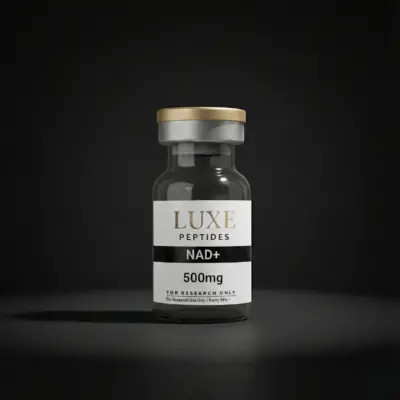
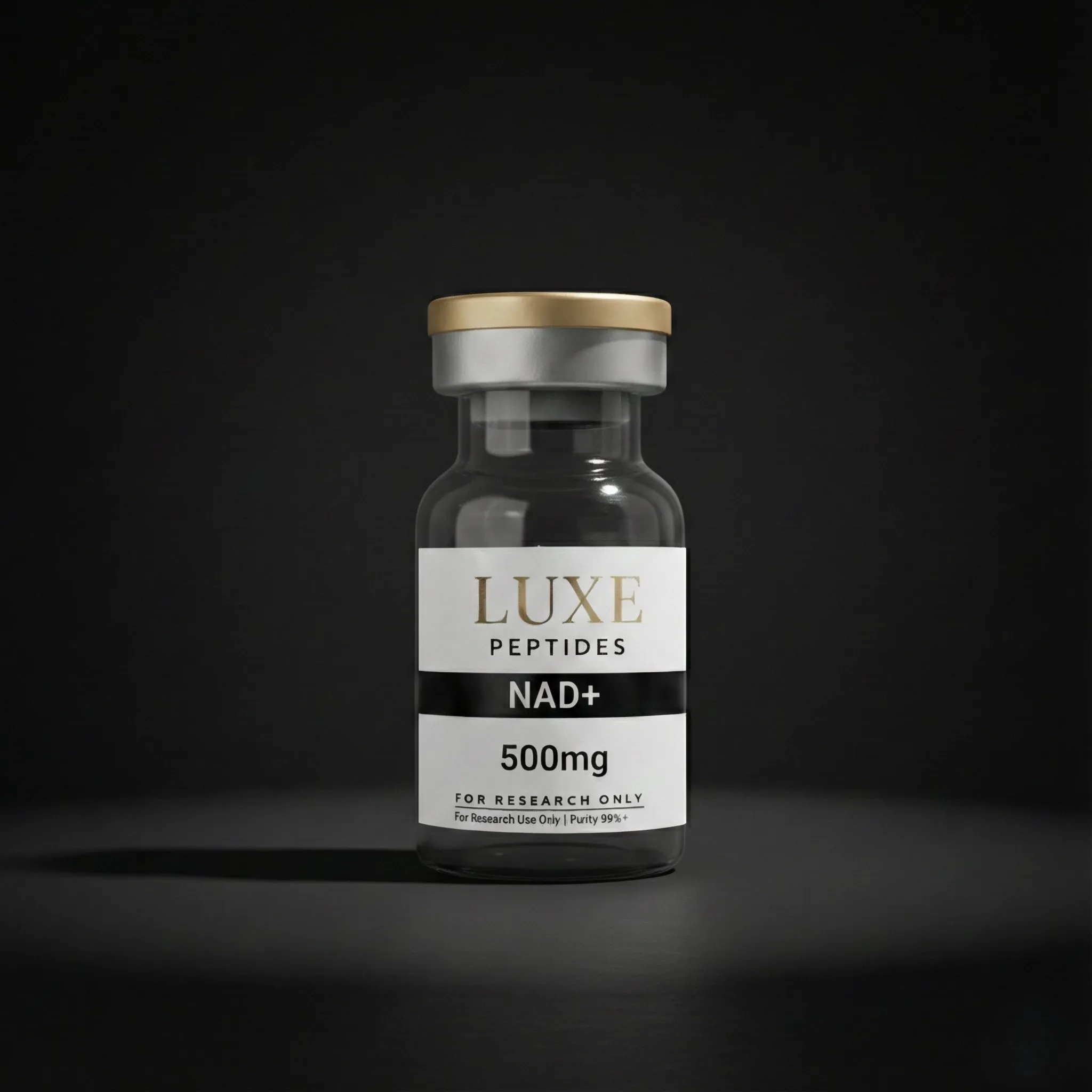
| Appearance | White lyophilized powder in glass vial |
| Storage | Store at -20°C desiccated. Protect from light, moisture, and heat. Reconstituted solutions at 2-8°C, use immediately. |
| Testing | Third-party tested — Certificate of Analysis available |
Frequently Asked Questions
NAD+ (nicotinamide adenine dinucleotide) is an essential coenzyme involved in over 500 enzymatic reactions. It functions as both a redox carrier and a substrate for sirtuins, PARPs, and CD38.
The CAS registry number for NAD+ is 53-84-9.
No, NAD+ is a dinucleotide coenzyme composed of nicotinamide and adenine nucleotides linked by phosphodiester bonds. It is not a peptide.
Store NAD+ at -20°C desiccated, protected from light, moisture, and heat. Reconstituted solutions should be used immediately.
Age-related NAD+ decline is attributed to increased CD38 ectoenzyme expression, reduced NAMPT salvage pathway activity, and increased PARP-mediated NAD+ consumption from accumulated DNA damage.
Sirtuins (SIRT1-7) are NAD+-dependent deacetylase enzymes that regulate gene expression, mitochondrial biogenesis, DNA repair, and metabolic programming. Their activity depends on cellular NAD+ levels.
References
- Verdin E. NAD+ in aging, metabolism, and neurodegeneration. Science. 2015;350(6265):1208-1213. PMID: 26785480
- Imai SI, Guarente L. NAD+ and sirtuins in aging and disease. Trends Cell Biol. 2014;24(8):464-471. PMID: 24786309
- Yoshino J, et al. NAD+ intermediates: the biology and therapeutic potential of NMN and NR. Cell Metab. 2018;27(3):513-528. PMID: 29249689
Customer Reviews
This vendor sets the standard. Highly recommend.
Outstanding quality. This is my go-to source now.
Reordering because the first batch was flawless.
Very pleased with this purchase. Will be a repeat customer.
Fast shipping, well-packaged. Product quality is top-notch.
Purity exceeded expectations. Prompt delivery too.
Exactly what I needed for my research. Clean product.
Good product overall. Shipping took a couple extra days.
Purity exceeded expectations. Prompt delivery too.
Excellent purity. Lab results confirmed. Will order again.
Really happy with this. Clean, pure, well-packaged.
Very pleased with this purchase. Will be a repeat customer.
Really happy with this. Clean, pure, well-packaged.
Great product. Arrived quickly and exactly as described.
Professional packaging, fast delivery, great product.
Very pleased with this purchase. Will be a repeat customer.