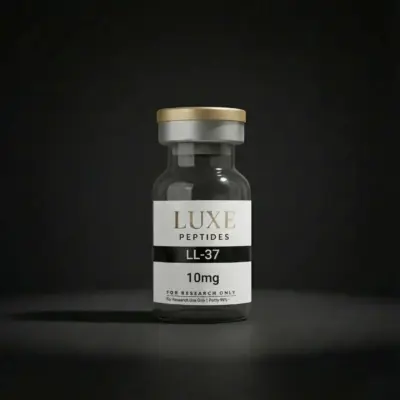
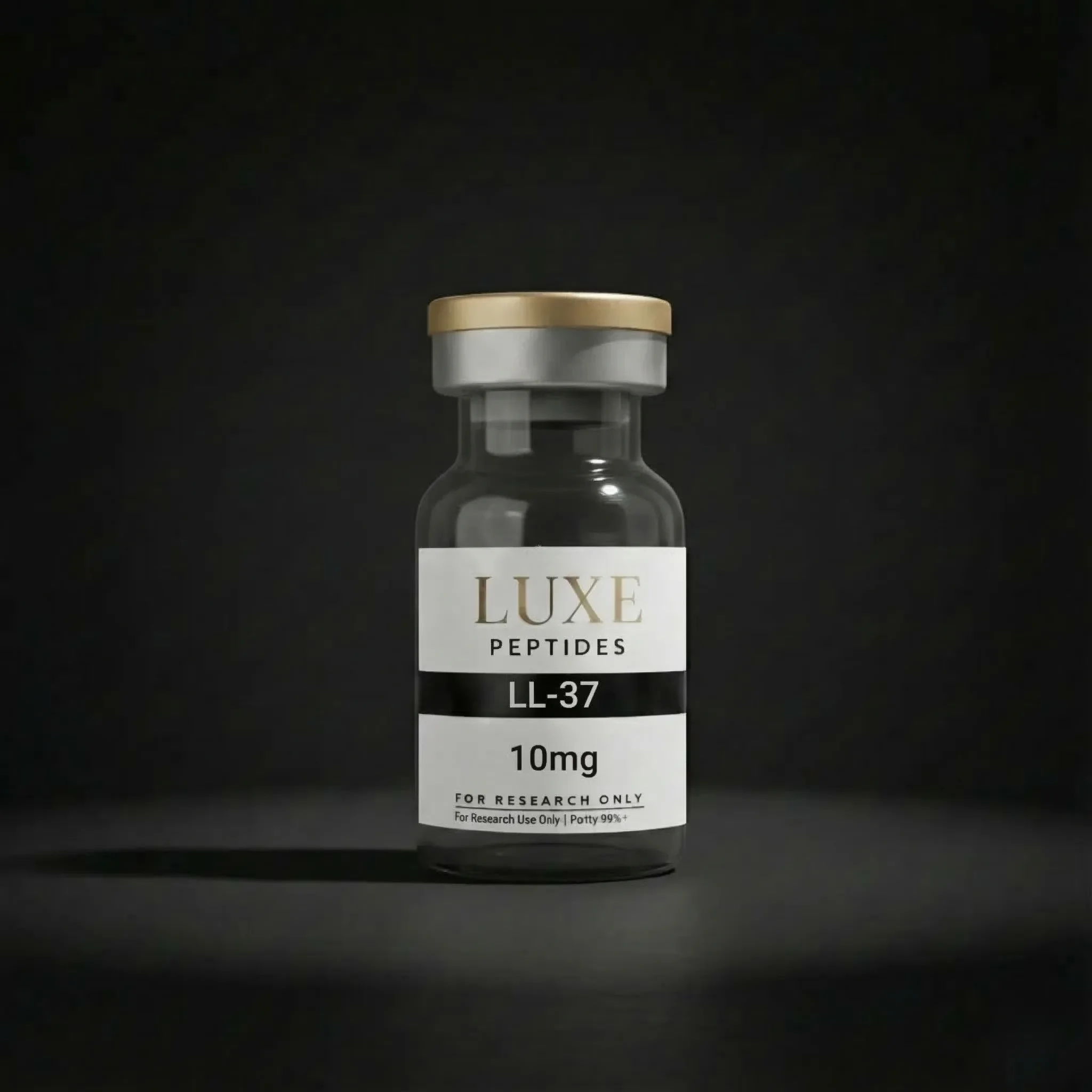
LL-37
$150.00
What is LL-37?
LL-37 is the only human cathelicidin antimicrobial peptide, a 37-amino acid alpha-helical peptide derived from the C-terminal cleavage of the hCAP18 precursor protein. It is produced by neutrophils, macrophages, epithelial cells, and other cell types as part of the innate immune defense system. LL-37 was first isolated and characterized in the late 1990s and has since become one of the most extensively studied host defense peptides in innate immunology research. The peptide derives its name from the two N-terminal leucine residues (“LL”) and its 37-amino acid length. LL-37 has broad-spectrum antimicrobial activity against gram-positive and gram-negative bacteria, fungi, and enveloped viruses. Beyond direct antimicrobial activity, LL-37 functions as an immunomodulatory peptide, influencing chemotaxis, cytokine production, angiogenesis, and wound biology. Its expression is regulated by vitamin D signaling through the VDR/RXR response element in the CAMP gene promoter.
Mechanism of Action
LL-37 has been investigated for its dual antimicrobial and immunomodulatory mechanisms. As an amphipathic alpha-helical peptide, LL-37 inserts into bacterial membranes through electrostatic interactions with anionic lipopolysaccharides (gram-negative) or lipoteichoic acids (gram-positive), forming pores or disrupting membrane integrity. Researchers observed that LL-37 is also effective against biofilms, disrupting the extracellular polymeric matrix and preventing biofilm formation at sub-bactericidal concentrations. Beyond direct antimicrobial activity, LL-37 has been investigated for its immunomodulatory functions: it acts as a chemoattractant for neutrophils, monocytes, and T cells through FPR2/ALX receptor activation; modulates TLR signaling by binding and neutralizing LPS and lipoteichoic acid; and influences dendritic cell differentiation and macrophage polarization. Studies suggest that LL-37 also promotes angiogenesis through VEGF-independent pathways and stimulates keratinocyte migration in wound models.
Published Research
Antimicrobial Activity
Dürr et al. (2006) reviewed LL-37’s antimicrobial spectrum and membrane-disrupting mechanism, characterizing its activity against a broad range of pathogens and its selectivity for microbial versus mammalian membranes [1].
Biofilm Disruption
Overhage et al. (2008) investigated LL-37’s anti-biofilm properties against Pseudomonas aeruginosa. Researchers observed that LL-37 at sub-inhibitory concentrations reduced biofilm formation, stimulated bacterial motility, and downregulated biofilm-related genes [2].
Immunomodulation
Vandamme et al. (2012) reviewed LL-37’s immunomodulatory functions, describing its effects on chemotaxis, cytokine modulation, TLR signaling, and adaptive immune cell regulation beyond its direct antimicrobial activity [3].
Product Specifications
| Product | LL-37 Lyophilized Powder |
|---|---|
| Available Sizes | 10mg |
| Purity | ≥99% (HPLC verified) |
| CAS Number | 154947-66-7 |
| Sequence | LLGDFFRKSKEKIGKEFKRIVQRIKDFLRNLVPRTES |
| Molecular Formula | C₂₀₅H₃₄₀N₆₀O₅₃ |
| Molecular Weight | 4,493.33 g/mol |
| Appearance | White lyophilized powder in glass vial |
| Storage | Store lyophilized at -20°C. Reconstituted solution at 2-8°C, use within 7 days. |
| Testing | Third-party tested — Certificate of Analysis available |
Frequently Asked Questions
LL-37 is the only human cathelicidin antimicrobial peptide, a 37-amino acid host defense peptide with both direct antimicrobial and immunomodulatory functions.
The CAS registry number for LL-37 is 154947-66-7.
LL-37 is an amphipathic alpha-helical peptide that inserts into bacterial membranes through electrostatic interactions, forming pores that disrupt membrane integrity.
Store lyophilized LL-37 at -20°C. Once reconstituted, store at 2-8°C and use within 7 days due to its susceptibility to proteolytic degradation.
No, LL-37 has extensive immunomodulatory functions including chemotaxis, cytokine modulation, TLR signaling regulation, angiogenesis, and effects on wound biology.
LL-37 expression is regulated by vitamin D signaling through a VDR/RXR response element in the CAMP gene promoter, linking vitamin D status to innate immune defense.
References
- Dürr UH, et al. LL-37, the only human member of the cathelicidin family of antimicrobial peptides. Biochim Biophys Acta. 2006;1758(9):1408-1425. PMID: 16716248
- Overhage J, et al. Human host defense peptide LL-37 prevents bacterial biofilm formation. Infect Immun. 2008;76(9):4176-4182. PMID: 18591225
- Vandamme D, et al. A comprehensive summary of LL-37, the factotum human cathelicidin peptide. Cell Immunol. 2012;280(1):22-35. PMID: 23246832

Customer Reviews
Consistent quality across multiple orders. Very satisfied.
Really happy with this. Clean, pure, well-packaged.
This vendor sets the standard. Highly recommend.
Great product. Arrived quickly and exactly as described.
Good product overall. Shipping took a couple extra days.