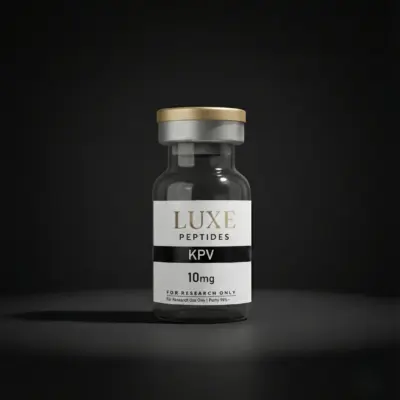
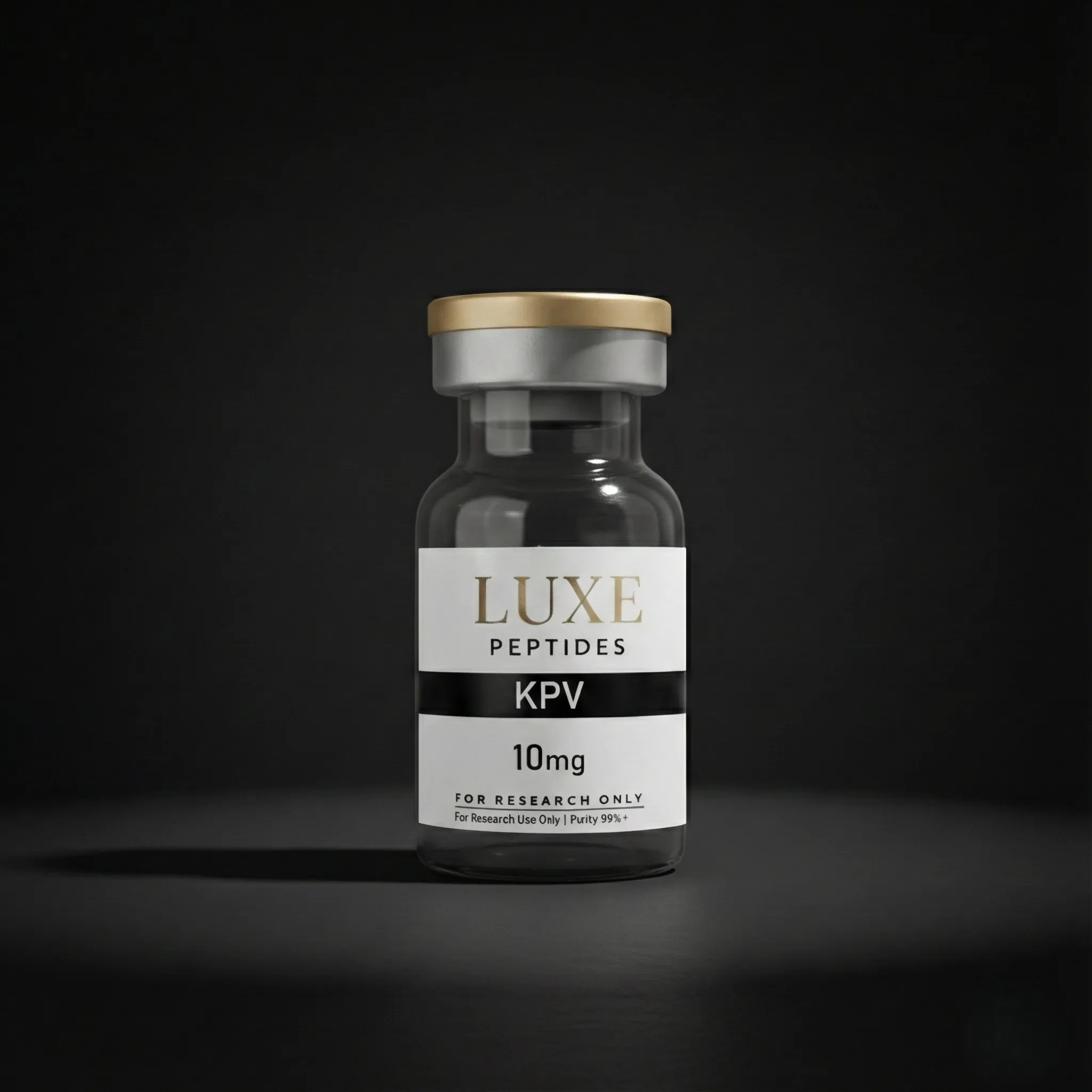
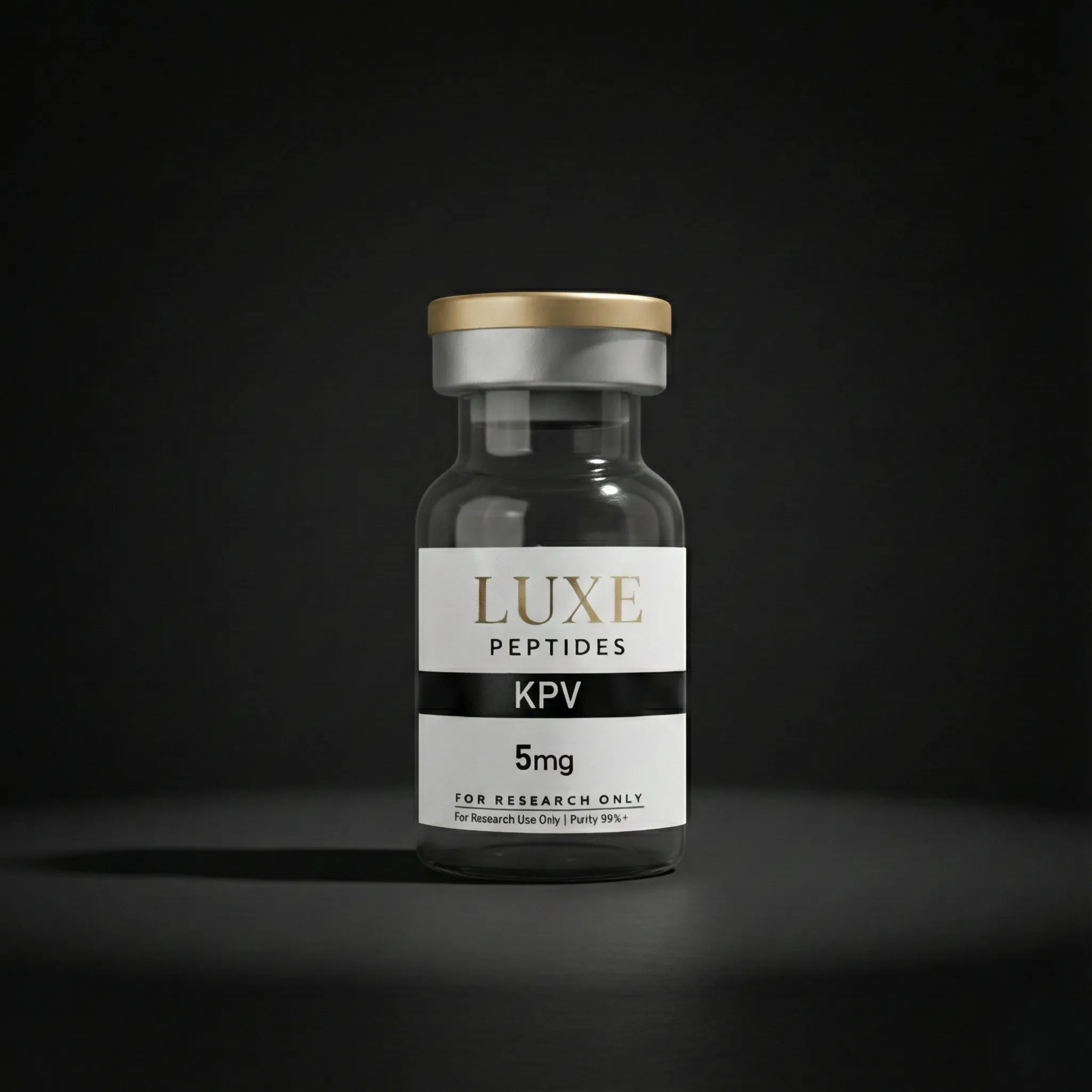
KPV
Price range: $50.00 through $80.00
What is KPV?
KPV is a synthetic tripeptide (Lys-Pro-Val) corresponding to the C-terminal amino acids 11-13 of alpha-melanocyte-stimulating hormone (α-MSH). Despite being only three amino acids in length, KPV retains significant anti-inflammatory signaling activity from the parent α-MSH molecule. Importantly, KPV’s anti-inflammatory mechanism has been characterized as independent of melanocortin receptor activation — unlike full-length α-MSH, which acts through MC1R and other melanocortin receptors, KPV appears to enter cells directly and modulate intracellular NF-κB signaling. This receptor-independent mechanism makes KPV unique among melanocortin-derived peptides. KPV has been investigated in preclinical models of mucosal inflammation, dermatitis, and colitis, where researchers have observed effects on inflammatory cytokine profiles and NF-κB nuclear translocation.
Mechanism of Action
KPV has been investigated for its anti-inflammatory activity through NF-κB pathway modulation. Researchers observed that KPV enters cells through a transporter-mediated mechanism (PepT1 in intestinal epithelium) and directly inhibits NF-κB activation by preventing IκBα phosphorylation and subsequent NF-κB nuclear translocation. This inhibition reduces transcription of NF-κB-dependent inflammatory genes, including TNF-α, IL-6, IL-8, and ICAM-1. Studies suggest that KPV’s mechanism is distinct from conventional melanocortin receptor signaling, as the peptide retains anti-inflammatory activity in cells lacking MC1R. In mucosal models, researchers observed that KPV administration was associated with reduced inflammatory cytokine production and maintained epithelial barrier function. The PepT1-dependent uptake mechanism is particularly relevant for intestinal applications, as PepT1 is highly expressed on intestinal epithelial cells, providing a natural route for KPV internalization in the gastrointestinal tract.
Published Research
NF-κB Inhibition
Brzoska et al. (2008) reviewed the anti-inflammatory mechanisms of α-MSH-derived peptides, including KPV, demonstrating NF-κB-dependent signaling modulation independent of melanocortin receptor activation [1].
Intestinal Inflammation
Dalmasso et al. (2008) investigated KPV in colitis models and demonstrated that the tripeptide was transported into intestinal epithelial cells via PepT1 and exerted anti-inflammatory effects through NF-κB inhibition [2].
Mucosal Biology
Kannengiesser et al. (2008) investigated KPV in a murine colitis model and observed that oral administration was associated with reduced inflammatory parameters and improved histological scores compared to vehicle controls [3].
Product Specifications
| Product | KPV Lyophilized Powder |
|---|---|
| Available Sizes | 5mg, 10mg |
| Purity | ≥99% (HPLC verified) |
| CAS Number | 67727-97-3 |
| Sequence | Lys-Pro-Val |
| Molecular Formula | C₁₆H₃₀N₄O₄ |
| Molecular Weight | 342.43 g/mol |
| Appearance | White lyophilized powder in glass vial |
| Storage | Store at -20°C desiccated. Protect from moisture. Reconstituted solution at 2-8°C. |
| Testing | Third-party tested — Certificate of Analysis available |
Frequently Asked Questions
KPV is a tripeptide (Lys-Pro-Val) derived from the C-terminus of alpha-MSH. It has been investigated for anti-inflammatory activity through NF-u03baB modulation independent of melanocortin receptors.
The CAS registry number for KPV is 67727-97-3.
No, KPV's anti-inflammatory mechanism has been characterized as independent of melanocortin receptor activation. It enters cells directly and modulates intracellular NF-u03baB signaling.
Store KPV at -20°C desiccated, protected from moisture. Reconstituted solutions should be stored at 2-8°C.
PepT1 is a peptide transporter highly expressed on intestinal epithelial cells. It has been identified as the mechanism by which KPV enters intestinal cells.
KPV is studied in the context of NF-u03baB modulation, inflammatory signaling, mucosal immunology, and melanocortin biology in preclinical models.
References
- Brzoska T, et al. Alpha-melanocyte-stimulating hormone and related tripeptides: biochemistry, antiinflammatory and protective effects. Endocr Rev. 2008;29(5):581-602. PMID: 18612058
- Dalmasso G, et al. PepT1-mediated tripeptide KPV uptake reduces intestinal inflammation. Gastroenterology. 2008;134(1):166-178. PMID: 18061177
- Kannengiesser K, et al. Melanocortin-derived tripeptide KPV has anti-inflammatory potential in murine models of inflammatory bowel disease. Inflamm Bowel Dis. 2008;14(3):324-331. PMID: 18092346
Customer Reviews
Exactly what I needed for my research. Clean product.
Professional packaging, fast delivery, great product.
Excellent purity. Lab results confirmed. Will order again.
Quick delivery and the quality is consistently high.
Quick delivery and the quality is consistently high.
Really happy with this. Clean, pure, well-packaged.
Reordering because the first batch was flawless.
Good product overall. Shipping took a couple extra days.
Best quality I have found. Quick turnaround on shipping.
Impressed with the quality. Packaging was professional.
Really happy with this. Clean, pure, well-packaged.
Impressed with the quality. Packaging was professional.
Great product. Arrived quickly and exactly as described.
Solid product quality. COA checks out perfectly.
Reordering because the first batch was flawless.
Exactly what I needed for my research. Clean product.
Great product. Arrived quickly and exactly as described.
Excellent purity. Lab results confirmed. Will order again.
Impressed with the quality. Packaging was professional.
Nice quality. Website could use more research documentation.
Consistent quality across multiple orders. Very satisfied.
Excellent purity. Lab results confirmed. Will order again.
Verified purity matches the COA. Excellent.
Nice quality. Website could use more research documentation.
Third order from Luxe — always reliable, always pure.
Very pleased with this purchase. Will be a repeat customer.