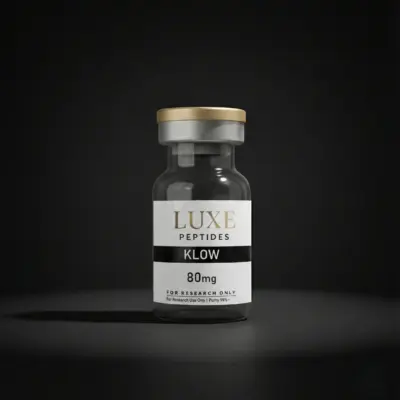
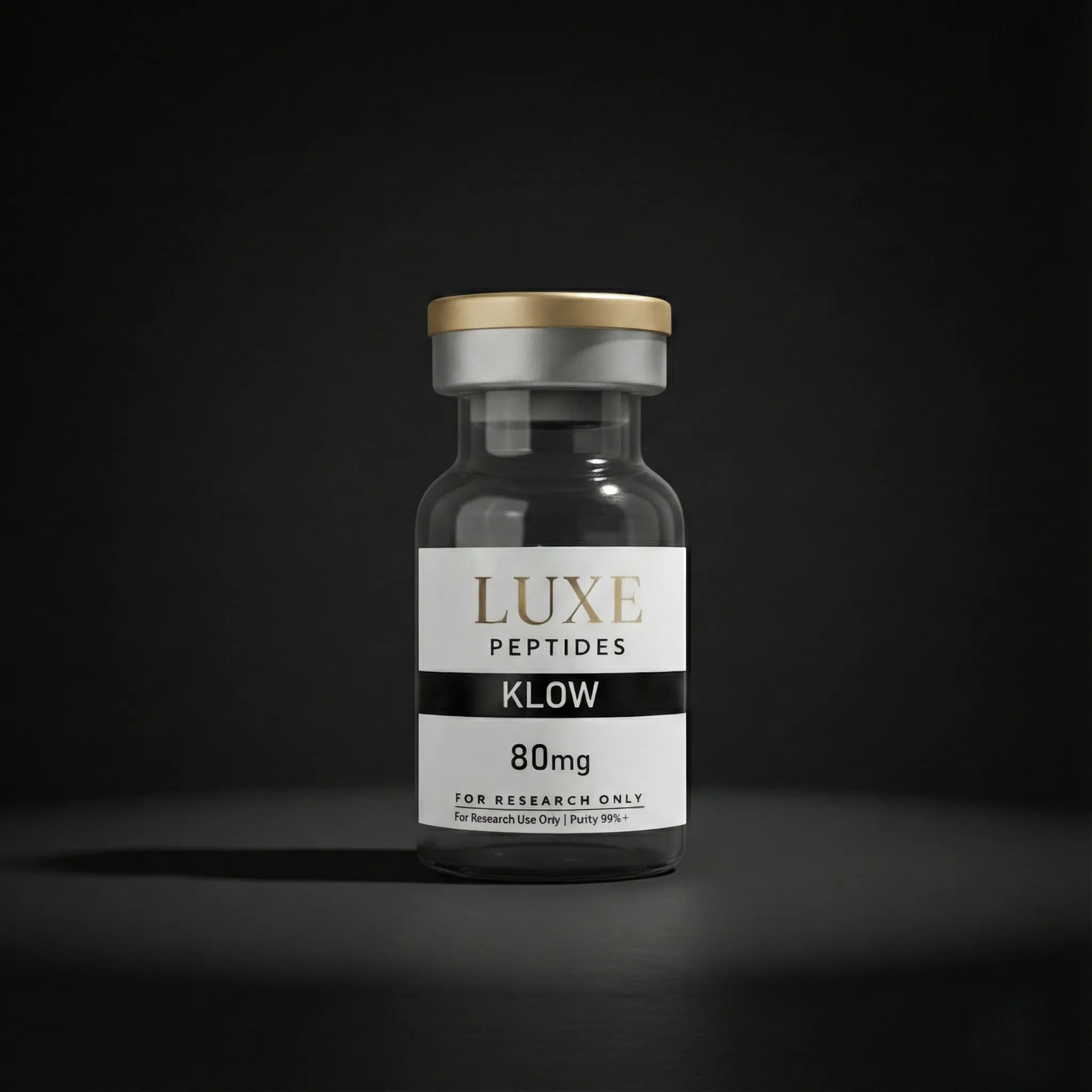
KLOW Blend GHK-CU/BPC-157/TB-500/KPV
$120.00
What is KLOW Blend GHK-CU/BPC-157/TB-500/KPV?
The KLOW Blend is a four-peptide research formulation combining GHK-Cu (copper tripeptide), BPC-157 (gastric pentadecapeptide), TB-500 (Thymosin Beta-4 fragment), and KPV (alpha-MSH C-terminal tripeptide). This blend extends the GLOW formulation (GHK-Cu + BPC-157 + TB-500) with the addition of KPV, a tripeptide derived from the C-terminal sequence of alpha-melanocyte-stimulating hormone (α-MSH). KPV adds an anti-inflammatory signaling dimension to the tissue biology profile of the other three components. Each peptide targets distinct pathways: GHK-Cu modulates gene expression and copper-dependent enzymes, BPC-157 interacts with angiogenic and nitric oxide pathways, TB-500 regulates actin dynamics and cell migration, and KPV has been investigated for NF-κB modulation and inflammatory cytokine signaling. Together they represent a multi-target approach to tissue biology research.
Mechanism of Action
The KLOW Blend has been investigated for the complementary mechanisms of its four peptide components. GHK-Cu modulates expression of over 4,000 genes through copper-dependent pathways, including collagen synthesis, metalloproteinase regulation, and antioxidant defense. BPC-157 upregulates VEGFR2 and modulates the nitric oxide and FAK-paxillin pathways. TB-500 sequesters G-actin and regulates cytoskeletal dynamics essential for cell migration. KPV, the C-terminal tripeptide of α-MSH (Lys-Pro-Val), has been investigated for its interaction with NF-κB signaling, with researchers observing inhibition of NF-κB nuclear translocation and downstream inflammatory cytokine expression (TNF-α, IL-6, IL-8) in cell culture models. Studies suggest that KPV’s anti-inflammatory mechanism is independent of melanocortin receptors and involves direct entry into cells, distinguishing it from full-length α-MSH signaling. The four-component combination engages ECM remodeling, vascular signaling, cytoskeletal dynamics, and inflammatory pathways simultaneously.
Published Research
KPV Anti-Inflammatory Activity
Brzoska et al. (2008) reviewed the anti-inflammatory properties of α-MSH-derived peptides, including KPV. Researchers described KPV’s ability to modulate NF-κB signaling and inflammatory cytokine expression independent of melanocortin receptor activation [1].
GHK-Cu Gene Regulation
Pickart et al. (2012) characterized GHK-Cu’s broad gene expression effects, establishing the tissue remodeling component of this blend [2].
BPC-157 and TB-500 Tissue Biology
Seiwerth et al. (2018) and Malinda et al. (1999) respectively established the vascular and cytoskeletal components of this blend through preclinical studies on BPC-157 angiogenesis and Thymosin Beta-4 cell migration [3,4].
Product Specifications
| Product | KLOW Blend GHK-CU/BPC-157/TB-500/KPV Lyophilized Powder |
|---|---|
| Available Sizes | 80mg |
| Purity | ≥99% (HPLC verified) |
| Sequence | GHK-Cu: Gly-His-Lys:Cu²⁺ | BPC-157: 15-aa gastric peptide | TB-500: Tβ4 fragment | KPV: Lys-Pro-Val |
| Appearance | White lyophilized powder in glass vial |
| Storage | Store lyophilized at -20°C protected from light. Reconstituted solution at 2-8°C, use within 14 days. |
| Testing | Third-party tested — Certificate of Analysis available |
Frequently Asked Questions
The KLOW Blend combines four peptides: GHK-Cu, BPC-157, TB-500, and KPV. It extends the GLOW blend with the addition of KPV for anti-inflammatory signaling research.
KPV (Lys-Pro-Val) is an u03b1-MSH-derived tripeptide investigated for NF-u03baB inhibition and anti-inflammatory cytokine modulation, adding an inflammatory signaling dimension.
Store lyophilized at -20°C protected from light. Once reconstituted, store at 2-8°C and use within 14 days.
Yes, GHK-Cu, BPC-157, TB-500, and KPV are each available as individual products.
KLOW contains the same three peptides as GLOW (GHK-Cu, BPC-157, TB-500) plus KPV, which adds anti-inflammatory NF-u03baB modulation to the formulation.
References
- Brzoska T, et al. Alpha-melanocyte-stimulating hormone and related tripeptides: biochemistry, antiinflammatory and protective effects in vitro and in vivo. Endocr Rev. 2008;29(5):581-602. PMID: 18612058
- Pickart L, et al. GHK peptide as a natural modulator of multiple cellular pathways in skin regeneration. Biomed Res Int. 2015;2015:648108. PMID: 25866791
- Seiwerth S, et al. BPC 157 and blood vessels. Curr Pharm Des. 2018;24(18):1955-1969. PMID: 29756566
- Malinda KM, et al. Thymosin beta4 accelerates wound healing. J Invest Dermatol. 1999;113(3):364-368. PMID: 10469334
Customer Reviews
Good product overall. Shipping took a couple extra days.
Best quality I have found. Quick turnaround on shipping.
Professional packaging, fast delivery, great product.
Consistent quality across multiple orders. Very satisfied.
Exactly what I needed for my research. Clean product.