Kisspeptin-10
Price range: $40.00 through $75.00
What is Kisspeptin-10?
Kisspeptin-10 is the C-terminal decapeptide fragment of kisspeptin-54 (metastin), the endogenous ligand of the KISS1 receptor (GPR54). Kisspeptin-10 contains the minimum sequence required for full receptor activation and is the most commonly used fragment in kisspeptin research. Kisspeptins are produced by KISS1 neurons in the hypothalamus and serve as the critical upstream regulators of GnRH (gonadotropin-releasing hormone) neurons, acting as gatekeepers of reproductive function. The discovery that loss-of-function mutations in KISS1R cause hypogonadotropic hypogonadism established kisspeptin as essential for puberty onset and fertility. Kisspeptin-10 potently stimulates GnRH secretion and downstream LH/FSH release, and has been investigated as a diagnostic and therapeutic tool in reproductive endocrinology research. The peptide has also been studied for its original discovery context as a metastasis suppressor.
Mechanism of Action
Kisspeptin-10 has been investigated for its agonist activity at the KISS1 receptor (KISS1R/GPR54), a Gq-coupled GPCR expressed on GnRH neurons in the hypothalamus. Researchers observed that kisspeptin-10 binding to KISS1R activates phospholipase C, generating IP3 and DAG, leading to intracellular calcium mobilization and PKC activation in GnRH neurons. This signaling cascade stimulates GnRH secretion from hypothalamic nerve terminals into the portal circulation, subsequently triggering LH and FSH release from pituitary gonadotrophs. Studies suggest that kisspeptin-10 is the most potent known stimulator of GnRH secretion, with activity at picomolar concentrations. In clinical studies, researchers observed that kisspeptin-10 administration produces rapid, dose-dependent increases in plasma LH and, to a lesser extent, FSH. The peptide’s effects are entirely dependent on intact GnRH signaling — GnRH receptor antagonists completely block kisspeptin-induced gonadotropin release.
Published Research
HPG Axis Regulation
Dhillo et al. (2005) demonstrated that kisspeptin-10 potently stimulates LH and FSH secretion in healthy human volunteers. This study established kisspeptin as the most potent known activator of the reproductive hormone axis in humans [1].
KISS1R and Reproduction
de Roux et al. (2003) identified loss-of-function mutations in GPR54 (KISS1R) as a cause of hypogonadotropic hypogonadism, establishing the essential role of kisspeptin signaling in reproductive function [2].
Diagnostic Applications
Jayasena et al. (2011) investigated kisspeptin-10 as a diagnostic tool for hypothalamic amenorrhea, demonstrating that it could stimulate LH release and predict responsiveness of the reproductive axis [3].
Product Specifications
| Product | Kisspeptin-10 Lyophilized Powder |
|---|---|
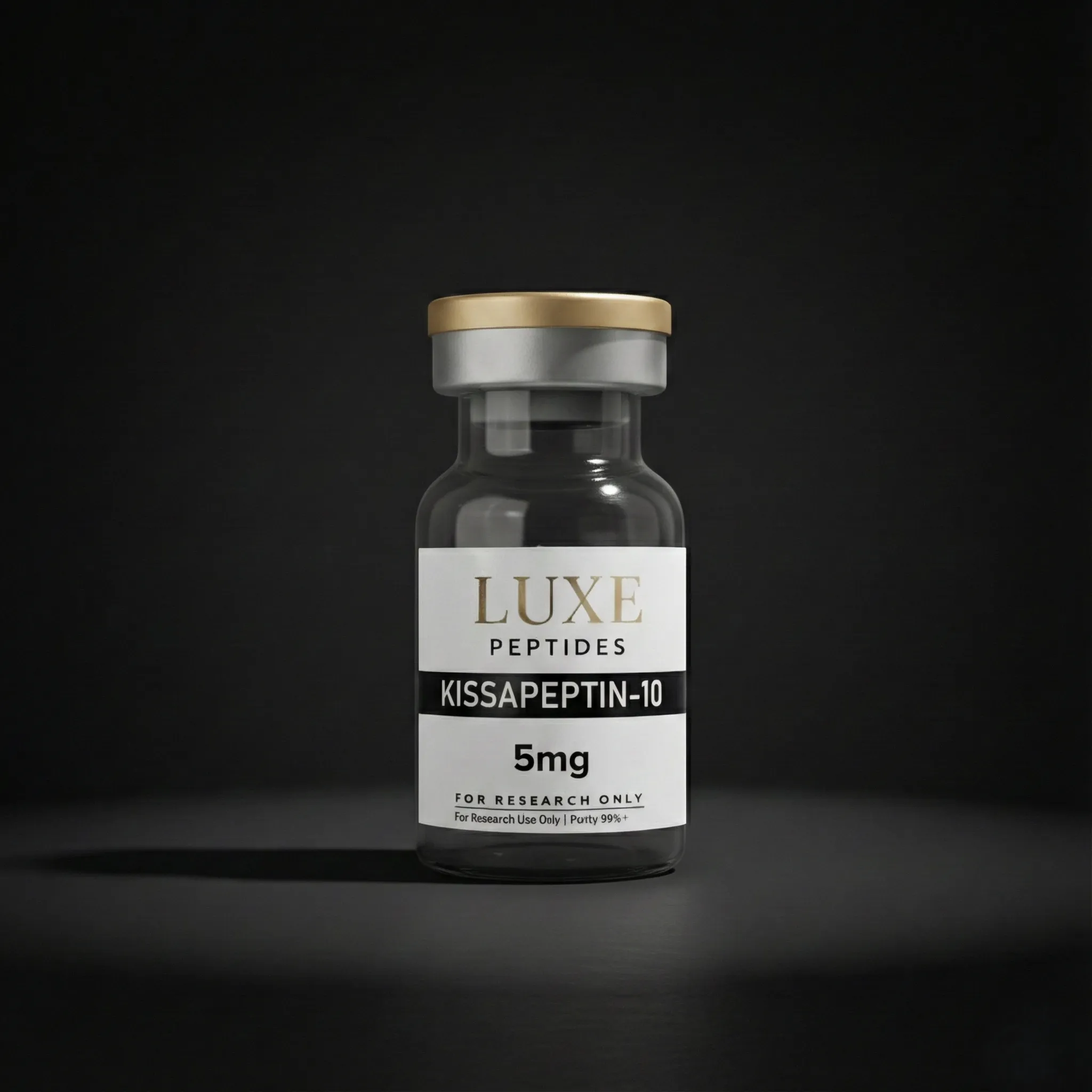
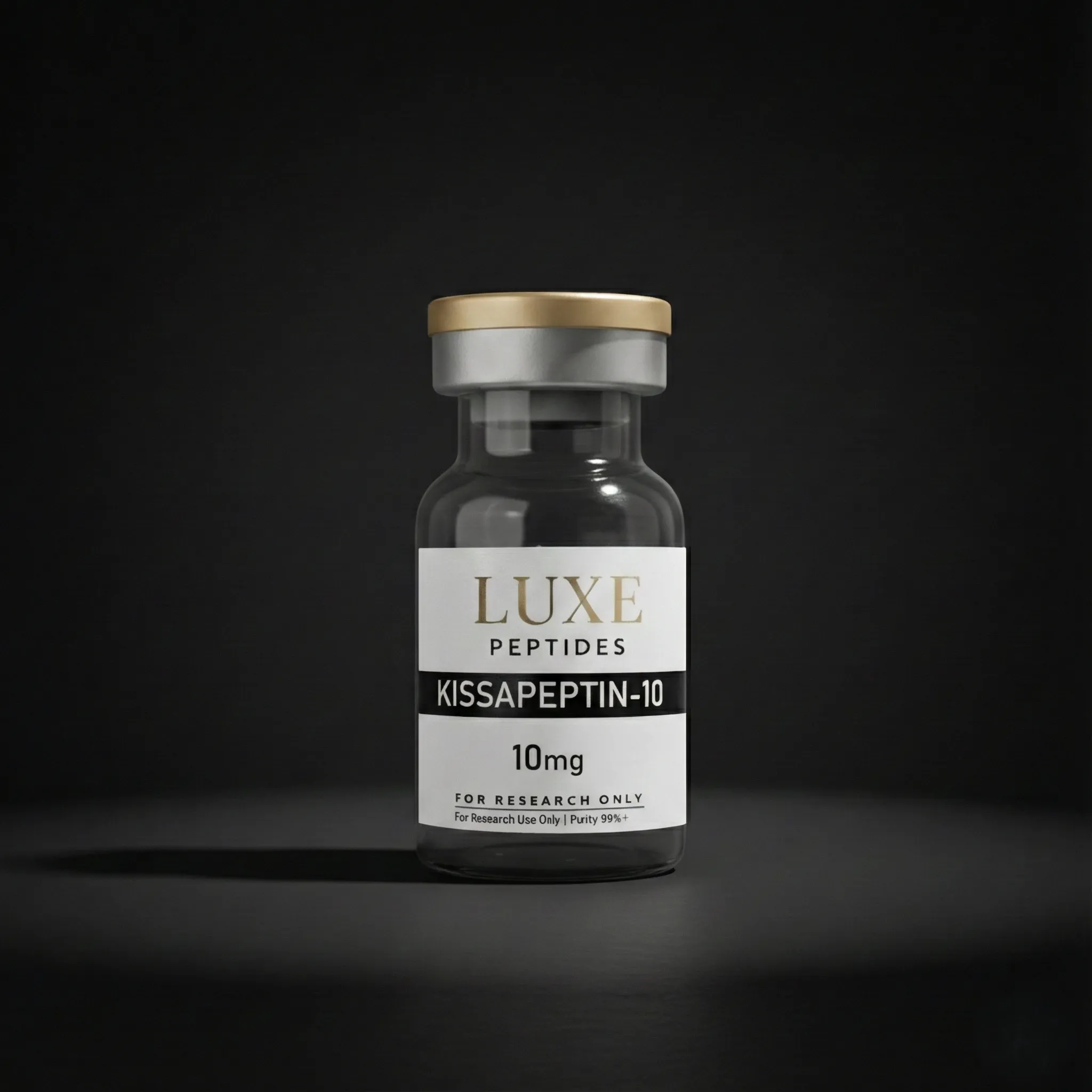
| Available Sizes | 5mg, 10mg |
| Purity | ≥99% (HPLC verified) |
| CAS Number | 374675-21-5 |
| Sequence | Tyr-Asn-Trp-Asn-Ser-Phe-Gly-Leu-Arg-Phe-NH₂ |
| Molecular Formula | C₆₃H₈₃N₁₃O₁₄ |
| Molecular Weight | 1,302.47 g/mol |
| Appearance | White lyophilized powder in glass vial |
| Storage | Store lyophilized at -20°C. Reconstituted solution at 2-8°C, use within 14 days. |
| Testing | Third-party tested — Certificate of Analysis available |
Frequently Asked Questions
Kisspeptin-10 is the C-terminal 10-amino acid fragment of kisspeptin-54 (metastin) that retains full activity at the KISS1 receptor. It is the most potent known stimulator of GnRH secretion.
The CAS registry number for Kisspeptin-10 is 374675-21-5.
Kisspeptin-10 activates KISS1R on hypothalamic GnRH neurons, stimulating GnRH release, which triggers LH and FSH secretion from the pituitary.
Store lyophilized at -20°C. Once reconstituted, store at 2-8°C and use within 14 days.
KISS1R (GPR54) is the G-protein coupled receptor for kisspeptins. Loss-of-function mutations in KISS1R cause hypogonadotropic hypogonadism, demonstrating its essential role in reproduction.
Yes, Kisspeptin-10 contains the minimum C-terminal sequence for full KISS1R activation and shows equivalent potency to Kisspeptin-54 in receptor binding assays.
References
- Dhillo WS, et al. Kisspeptin-54 stimulates the hypothalamic-pituitary gonadal axis in human males. J Clin Endocrinol Metab. 2005;90(12):6609-6615. PMID: 16174713
- de Roux N, et al. Hypogonadotropic hypogonadism due to loss of function of the KiSS1-derived peptide receptor GPR54. Proc Natl Acad Sci USA. 2003;100(19):10972-10976. PMID: 12944565
- Jayasena CN, et al. Kisspeptin-54 triggers egg maturation in women undergoing in vitro fertilization. J Clin Invest. 2014;124(8):3667-3677. PMID: 25036713

Customer Reviews
Outstanding quality. This is my go-to source now.
Exactly what I needed for my research. Clean product.
Verified purity matches the COA. Excellent.
Quick delivery and the quality is consistently high.
Consistent quality across multiple orders. Very satisfied.
Consistent quality across multiple orders. Very satisfied.
Solid product quality. COA checks out perfectly.
Exactly what I needed for my research. Clean product.
This vendor sets the standard. Highly recommend.
Excellent purity. Lab results confirmed. Will order again.
Impressed with the quality. Packaging was professional.
Product is great. Only minor delay in shipping.
Product arrived fast and in perfect condition.
Great product. Arrived quickly and exactly as described.
This vendor sets the standard. Highly recommend.