
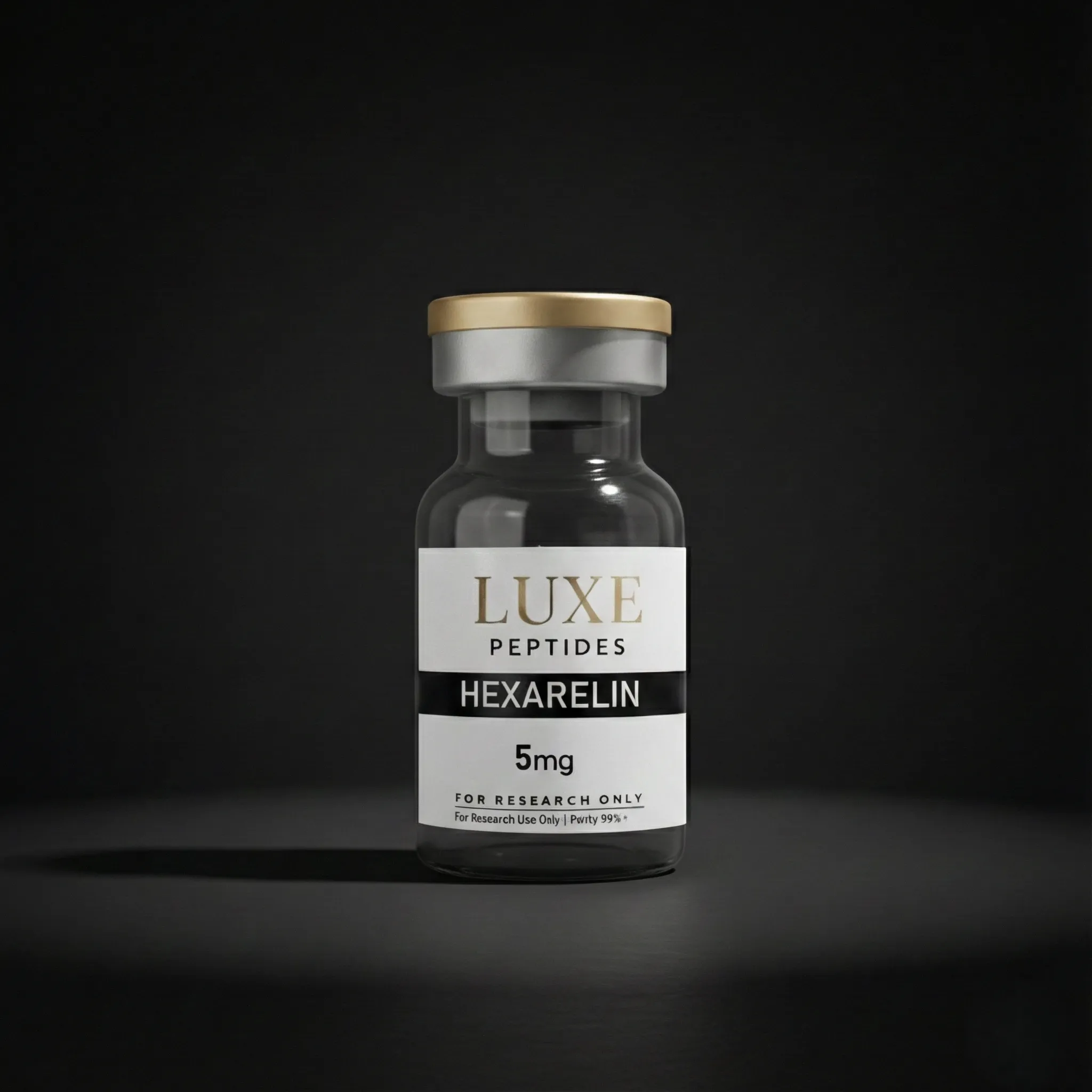
Hexarelin
$40.00
What is Hexarelin?
Hexarelin (examorelin) is a synthetic hexapeptide growth hormone secretagogue that activates both the GHS-R1a (ghrelin receptor) and the scavenger receptor CD36. Developed as an analog of GHRP-6, hexarelin contains a 2-methyl-tryptophan substitution that confers enhanced stability and potency. It is one of the most potent peptide GH secretagogues characterized, though it is also notable for its significant cardiac activity independent of GH release. The dual receptor profile — GHSR for GH secretion and CD36 for cardiac signaling — makes hexarelin pharmacologically unique among the GHRP family. Hexarelin has been investigated in clinical studies examining both its GH-releasing and cardioprotective properties. It demonstrates dose-dependent GH release but is subject to tachyphylaxis (reduced response) with repeated dosing, which limits its utility for sustained GH elevation.
Mechanism of Action
Hexarelin has been investigated for its dual agonist activity at GHS-R1a and CD36 receptors. At the pituitary level, hexarelin activates GHS-R1a through Gq-coupled signaling, stimulating calcium-dependent GH release from somatotrophs. However, researchers observed that hexarelin’s cardiac effects are mediated through CD36, a scavenger receptor expressed on cardiomyocytes, macrophages, and endothelial cells. Studies suggest that CD36 activation by hexarelin in cardiac tissue is associated with PPARγ-dependent signaling, Akt phosphorylation, and changes in cardiac gene expression profiles. In isolated heart models, researchers observed that hexarelin was associated with functional changes in cardiac contractility and coronary perfusion parameters independent of GH or IGF-1 signaling. The peptide also demonstrates notable tachyphylaxis at the pituitary level — repeated dosing leads to progressively diminished GH responses, attributed to GHSR desensitization, while cardiac CD36-mediated effects appear more sustained.
Published Research
Cardiac CD36 Signaling
Bhatt et al. (2006) investigated hexarelin’s cardiac effects and identified CD36 as its cardiac receptor, distinct from the GHS-R1a responsible for GH release. Researchers demonstrated that hexarelin’s cardiac activity persisted in GHS-R1a knockout models, confirming the independent CD36-mediated pathway [1].
Clinical GH Release
Ghigo et al. (1994) characterized hexarelin’s dose-response relationship for GH release in human subjects, establishing it as one of the most potent peptide GH secretagogues with both intravenous and subcutaneous activity [2].
Tachyphylaxis
Ong et al. (1998) investigated the phenomenon of hexarelin tachyphylaxis, demonstrating that repeated daily dosing led to progressively reduced GH responses. This study characterized the desensitization kinetics and recovery patterns of pituitary GHSR [3].
Product Specifications
| Product | Hexarelin Lyophilized Powder |
|---|---|
| Available Sizes | 5mg |
| Purity | ≥99% (HPLC verified) |
| CAS Number | 140703-51-1 |
| Sequence | His-D-2-Me-Trp-Ala-Trp-D-Phe-Lys-NH₂ |
| Molecular Formula | C₄₇H₅₈N₁₂O₆ |
| Molecular Weight | 887.03 g/mol |
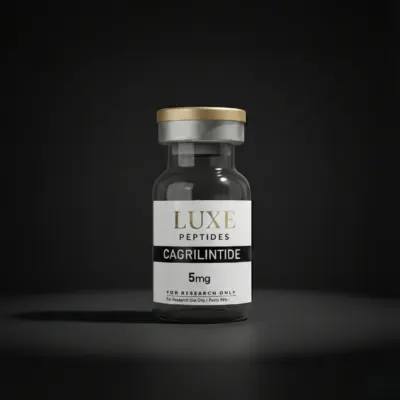
| Appearance | White lyophilized powder in glass vial |
| Storage | Store lyophilized at -20°C. Reconstituted solution at 2-8°C, use within 21 days. |
| Testing | Third-party tested — Certificate of Analysis available |
Frequently Asked Questions
Hexarelin (examorelin) is a synthetic hexapeptide that activates both the ghrelin receptor (GHS-R1a) and CD36 scavenger receptor. It is one of the most potent peptide GH secretagogues.
The CAS registry number for Hexarelin is 140703-51-1.
Hexarelin has dual receptor activity u2014 it activates both GHS-R1a (for GH release) and CD36 (for cardiac signaling). Its cardiac effects are independent of GH or IGF-1.
Tachyphylaxis is a progressive reduction in response to repeated doses. Hexarelin demonstrates GH release tachyphylaxis with daily dosing due to GHSR desensitization.
Store lyophilized Hexarelin at -20°C. Once reconstituted, store at 2-8°C and use within 21 days.
Hexarelin can stimulate appetite through GHSR activation in hypothalamic feeding centers, though its primary research interest is in GH secretion and cardiac CD36 signaling.
References
- Bhatt DL, et al. Hexarelin activates cardiac-specific CD36 scavenger receptor. Cardiovasc Res. 2006;69(1):78-87.
- Ghigo E, et al. Growth hormone-releasing activity of hexarelin, a new synthetic hexapeptide, after intravenous, subcutaneous, intranasal, and oral administration in man. J Clin Endocrinol Metab. 1994;78(3):693-698. PMID: 8126143
- Ong H, et al. Tachyphylaxis of growth hormone release following repeated administration of hexarelin. Life Sci. 1998;63(16):1423-1432.
Customer Reviews
Verified purity matches the COA. Excellent.
Best quality I have found. Quick turnaround on shipping.
Great product. Arrived quickly and exactly as described.
Solid product quality. COA checks out perfectly.
Very pleased with this purchase. Will be a repeat customer.
Product arrived fast and in perfect condition.
Reordering because the first batch was flawless.
Five stars earned. Quality speaks for itself.
Professional packaging, fast delivery, great product.
Nice quality. Website could use more research documentation.