Glutathione
Price range: $45.00 through $75.00
What is Glutathione?
Glutathione (GSH) is the most abundant intracellular thiol and a critical component of the cellular antioxidant defense system. It is a tripeptide composed of glutamate, cysteine, and glycine, with a unique gamma peptide bond between the glutamate side chain and cysteine that protects it from normal peptidase degradation. Glutathione exists in reduced (GSH) and oxidized (GSSG) forms, with the GSH:GSSG ratio serving as a key indicator of cellular redox status. It functions as a direct antioxidant through its thiol group, a substrate for glutathione peroxidase and glutathione S-transferase enzymes, and a regulator of protein function through S-glutathionylation. Intracellular concentrations range from 1-10 mM, making it one of the most concentrated metabolites in mammalian cells. Glutathione is synthesized endogenously by the sequential action of glutamate-cysteine ligase and glutathione synthetase.
Mechanism of Action
Glutathione has been investigated for its central role in cellular redox homeostasis and detoxification pathways. The reduced thiol group on the cysteine residue directly scavenges reactive oxygen species (ROS) and reactive nitrogen species (RNS), becoming oxidized to GSSG in the process. GSSG is recycled back to GSH by glutathione reductase using NADPH as the electron donor. As a substrate for glutathione peroxidase, GSH participates in the reduction of hydrogen peroxide and lipid hydroperoxides, protecting membranes from oxidative damage. In Phase II detoxification, glutathione S-transferase enzymes conjugate GSH to electrophilic xenobiotics and endogenous metabolites, facilitating their excretion. Researchers have also observed that glutathione regulates protein function through reversible S-glutathionylation of cysteine residues, modulating the activity of signaling proteins, transcription factors, and metabolic enzymes in response to oxidative conditions.
Published Research
Redox Biology
Forman et al. (2009) reviewed glutathione’s role as the master intracellular antioxidant, describing its enzymatic recycling, compartmentalization, and signaling functions. The review established the quantitative framework for understanding glutathione redox dynamics [1].
Glutathione in Disease Models
Ballatori et al. (2009) reviewed the role of glutathione depletion in various disease models, demonstrating that GSH:GSSG ratio disturbances are associated with oxidative stress across multiple organ systems in preclinical research [2].
S-Glutathionylation Signaling
Mieyal et al. (2008) characterized the role of protein S-glutathionylation as a redox-sensitive post-translational modification, establishing glutathione as a signaling molecule beyond its antioxidant function [3].
Product Specifications
| Product | Glutathione Lyophilized Powder |
|---|---|
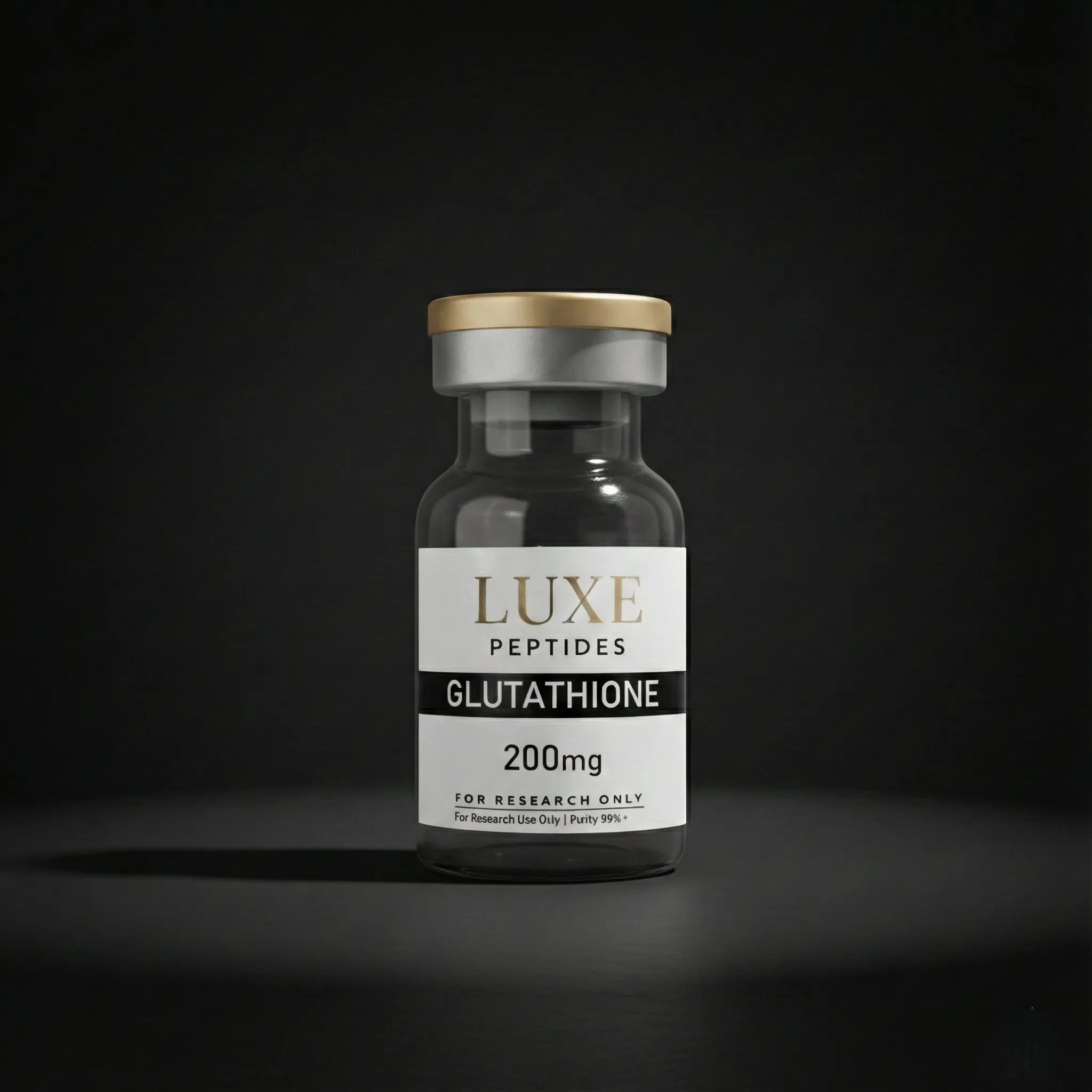
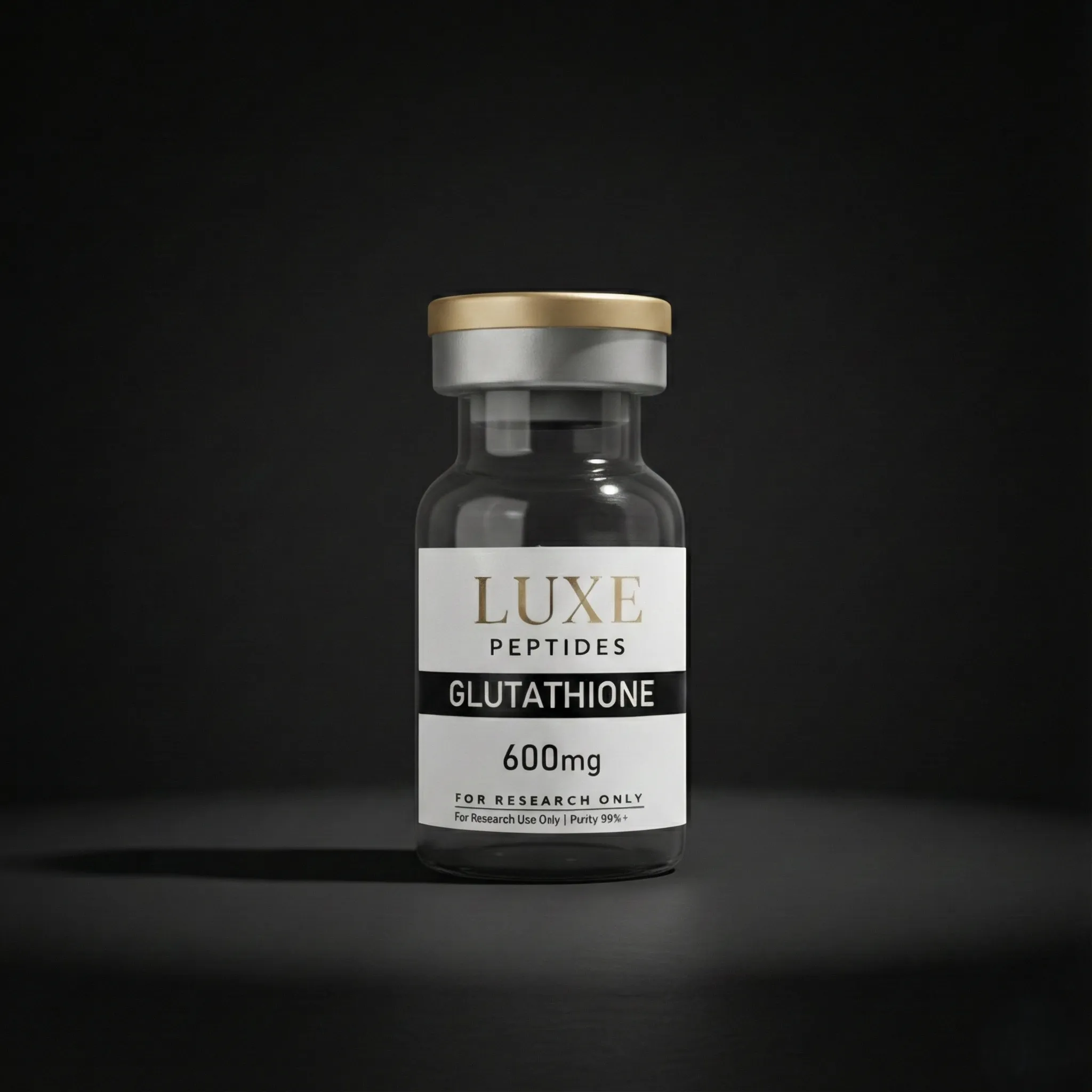
| Available Sizes | 200mg, 600mg |
| Purity | ≥99% (HPLC verified) |
| CAS Number | 70-18-8 |
| Sequence | γ-Glu-Cys-Gly |
| Molecular Formula | C₁₀H₁₇N₃O₆S |
| Molecular Weight | 307.32 g/mol |
| Appearance | White lyophilized powder in glass vial |
| Storage | Store at -20°C desiccated. Protect from light, moisture, and oxygen. Reconstituted solutions should be used immediately. |
| Testing | Third-party tested — Certificate of Analysis available |
Frequently Asked Questions
Glutathione (GSH) is a naturally occurring tripeptide (u03b3-Glu-Cys-Gly) and the most abundant intracellular antioxidant. It plays a central role in redox biology and detoxification.
The CAS registry number for reduced glutathione is 70-18-8.
GSH is the reduced (active) form of glutathione. GSSG is the oxidized form, a disulfide dimer. The GSH:GSSG ratio is a key indicator of cellular redox status.
Store at -20°C desiccated, protected from light, moisture, and oxygen. Reduced glutathione is sensitive to oxidation and should be reconstituted fresh.
Glutathione is a tripeptide but with a unique gamma peptide bond between glutamate and cysteine, which protects it from normal peptidase degradation.
Glutathione is studied in antioxidant defense, redox signaling, Phase II detoxification, thiol biochemistry, and S-glutathionylation research.
References
- Forman HJ, et al. Glutathione: overview of its protective roles, measurement, and biosynthesis. Mol Aspects Med. 2009;30(1-2):1-12. PMID: 18796312
- Ballatori N, et al. Glutathione dysregulation and the etiology and progression of human diseases. Biol Chem. 2009;390(3):191-214. PMID: 19166318
- Mieyal JJ, et al. Molecular mechanisms and clinical implications of reversible protein S-glutathionylation. Antioxid Redox Signal. 2008;10(11):1941-1988. PMID: 18774901
Customer Reviews
Excellent purity. Lab results confirmed. Will order again.
Excellent purity. Lab results confirmed. Will order again.
Verified purity matches the COA. Excellent.
Solid product quality. COA checks out perfectly.
Consistent quality across multiple orders. Very satisfied.
Third order from Luxe — always reliable, always pure.
Quick delivery and the quality is consistently high.
Very pleased with this purchase. Will be a repeat customer.
Very pleased with this purchase. Will be a repeat customer.
Verified purity matches the COA. Excellent.
Reordering because the first batch was flawless.
Five stars earned. Quality speaks for itself.
Product arrived fast and in perfect condition.
Professional packaging, fast delivery, great product.
Third order from Luxe — always reliable, always pure.
Solid quality for the price point. Good experience.
Third order from Luxe — always reliable, always pure.
Very pleased with this purchase. Will be a repeat customer.
Professional packaging, fast delivery, great product.
Outstanding quality. This is my go-to source now.
Verified purity matches the COA. Excellent.
Really happy with this. Clean, pure, well-packaged.
Good purity, fair pricing. Would order again.