DSIP Delta Sleep-Inducing Peptide
Price range: $33.00 through $75.00
What is DSIP Delta Sleep-Inducing Peptide?
DSIP (Delta Sleep-Inducing Peptide) is a naturally occurring nonapeptide first isolated from the cerebral venous blood of rabbits during induced sleep by Schoenenberger and Monnier in 1977. The peptide consists of nine amino acids (Trp-Ala-Gly-Gly-Asp-Ala-Ser-Gly-Glu) and is found in both the brain and peripheral tissues. DSIP has been investigated for its role in sleep regulation, neuroendocrine modulation, and stress response across numerous preclinical studies over more than four decades. It is unique among neuropeptides in that it crosses the blood-brain barrier and has been detected in both free and bound forms in circulation. DSIP has been studied for its interactions with multiple physiological systems beyond sleep, including cortisol regulation, body temperature, and the hypothalamic-pituitary axis. Despite its name, its precise mechanism of sleep modulation remains an active area of investigation.
Mechanism of Action
DSIP has been investigated for its neuromodulatory activity across multiple brain regions and neurotransmitter systems. Researchers observed that DSIP crosses the blood-brain barrier and has been detected in the hypothalamus, limbic structures, and pituitary gland. Studies suggest that DSIP modulates GABA-ergic, glutamatergic, and serotonergic neurotransmission, though a specific DSIP receptor has not been conclusively identified. In sleep research models, DSIP administration has been associated with changes in delta wave (slow-wave sleep) architecture and sleep-wake cycle regulation. Researchers have also observed that DSIP interacts with the hypothalamic-pituitary-adrenal (HPA) axis, with studies suggesting modulatory effects on ACTH and cortisol release patterns. Additionally, DSIP has been investigated for its effects on LH release and thermoregulation. The peptide appears to function as a sleep-promoting modulator rather than a sedative, as it has been associated with normalized sleep patterns rather than forced sedation in preclinical models.
Published Research
Discovery and Characterization
Schoenenberger and Monnier (1977) isolated and characterized DSIP from rabbit cerebral venous blood during electrically induced sleep. This foundational work identified the nonapeptide sequence and demonstrated its sleep-promoting properties in cross-perfusion experiments [1].
Neuroendocrine Effects
Graf and Kastin (1984) reviewed the multiple physiological effects of DSIP beyond sleep, including its interactions with the HPA axis, pain modulation, and thermoregulation. The review established DSIP as a pleiotropic neuromodulator rather than a simple sleep factor [2].
Stress Response Modulation
Khvatova et al. (2003) investigated DSIP in stress models and observed that the peptide was associated with changes in oxidative stress markers and antioxidant enzyme activity in brain tissue, suggesting a protective role during stress responses [3].
Product Specifications
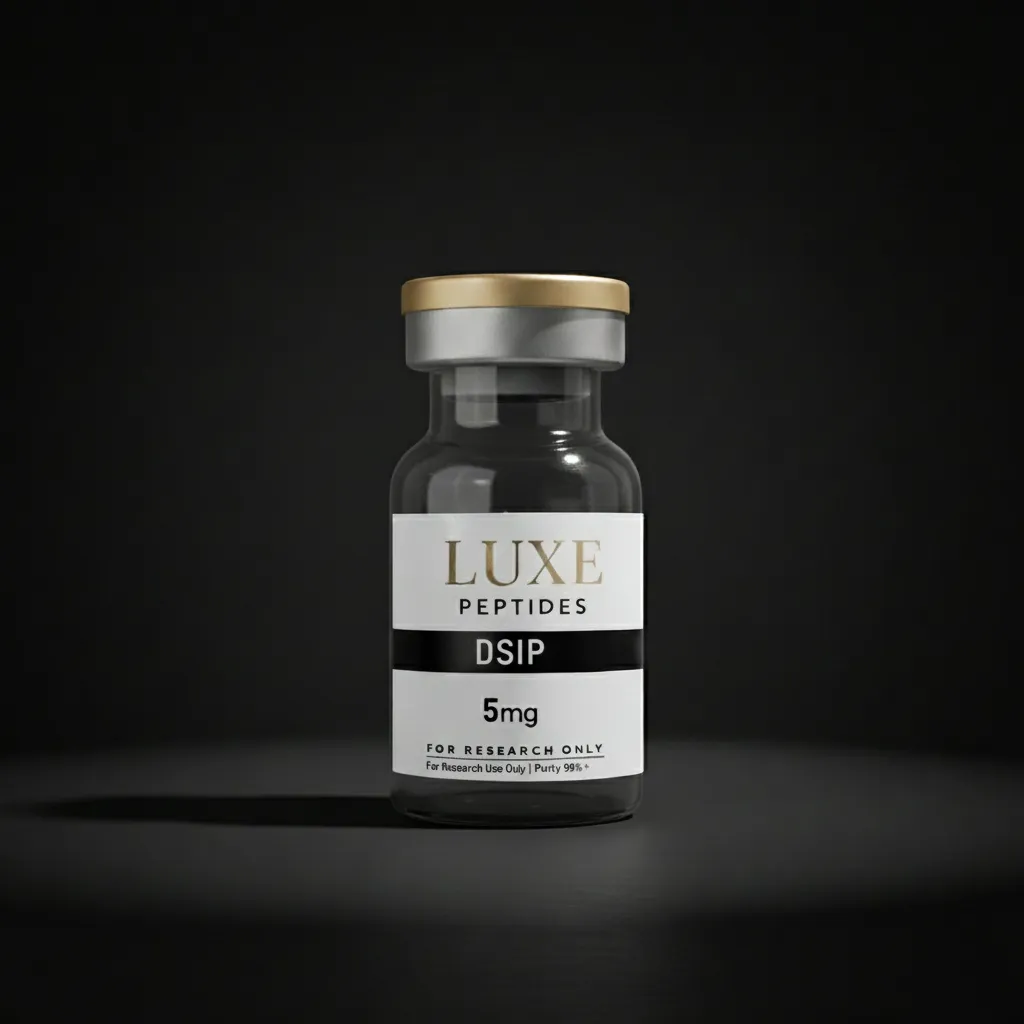
| Product | DSIP Delta Sleep-Inducing Peptide Lyophilized Powder |
|---|---|
| Available Sizes | 5mg, 10mg, 15mg |
| Purity | ≥99% (HPLC verified) |
| CAS Number | 62568-57-4 |
| Sequence | Trp-Ala-Gly-Gly-Asp-Ala-Ser-Gly-Glu |
| Molecular Formula | C₃₅H₄₈N₁₀O₁₅ |
| Molecular Weight | 848.81 g/mol |
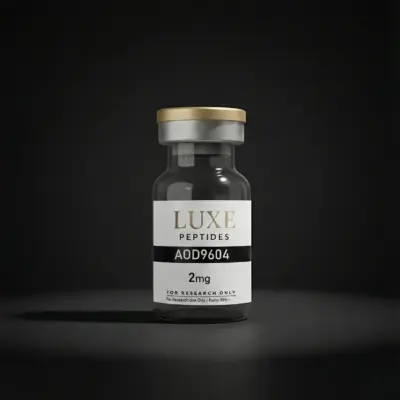
| Appearance | White lyophilized powder in glass vial |
| Storage | Store lyophilized at -20°C. Reconstituted solution at 2-8°C, use within 14 days. |
| Testing | Third-party tested — Certificate of Analysis available |
Frequently Asked Questions
DSIP (Delta Sleep-Inducing Peptide) is a naturally occurring nine-amino acid peptide first isolated from rabbit brain in 1977. It is studied for its role in sleep regulation and neuroendocrine modulation.
The CAS registry number for DSIP is 62568-57-4.
Yes, DSIP has been shown to cross the blood-brain barrier and has been detected in multiple brain regions including the hypothalamus and limbic structures.
Store lyophilized DSIP at -20°C. Once reconstituted, store at 2-8°C and use within 14 days.
DSIP is characterized as a sleep modulator rather than a sedative. In preclinical studies, it has been associated with normalization of sleep patterns rather than forced sedation.
DSIP is studied in the context of sleep architecture, neuroendocrine signaling, stress response, HPA axis modulation, and circadian biology in preclinical models.
References
- Schoenenberger GA, Monnier M. Characterization of a delta-electroencephalogram sleep-inducing peptide. Proc Natl Acad Sci USA. 1977;74(3):1282-1286. PMID: 265573
- Graf MV, Kastin AJ. Delta-sleep-inducing peptide (DSIP): a review. Neurosci Biobehav Rev. 1984;8(1):83-93. PMID: 6145134
- Khvatova EM, et al. Delta sleep-inducing peptide: effect on oxidative modification of brain proteins during various conditions of stress. Biomed Khim. 2003;49(2):175-179.

Customer Reviews
Really happy with this. Clean, pure, well-packaged.
Purity exceeded expectations. Prompt delivery too.
Good product overall. Shipping took a couple extra days.
Nice quality. Website could use more research documentation.
Best quality I have found. Quick turnaround on shipping.
Quality is solid. Wish there were more size options.
Solid product quality. COA checks out perfectly.
Excellent purity. Lab results confirmed. Will order again.
Best quality I have found. Quick turnaround on shipping.
Verified purity matches the COA. Excellent.
Excellent purity. Lab results confirmed. Will order again.
Five stars earned. Quality speaks for itself.
Best quality I have found. Quick turnaround on shipping.
Great product. Arrived quickly and exactly as described.
Very pleased with this purchase. Will be a repeat customer.
Reordering because the first batch was flawless.
Outstanding quality. This is my go-to source now.
Outstanding quality. This is my go-to source now.
Impressed with the quality. Packaging was professional.