BPC-157 + TB-500 Blend
Price range: $80.00 through $140.00
What is BPC-157 + TB-500 Blend?
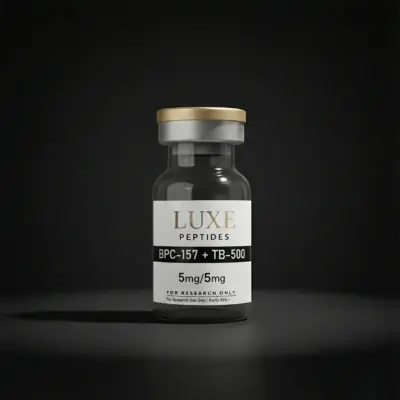
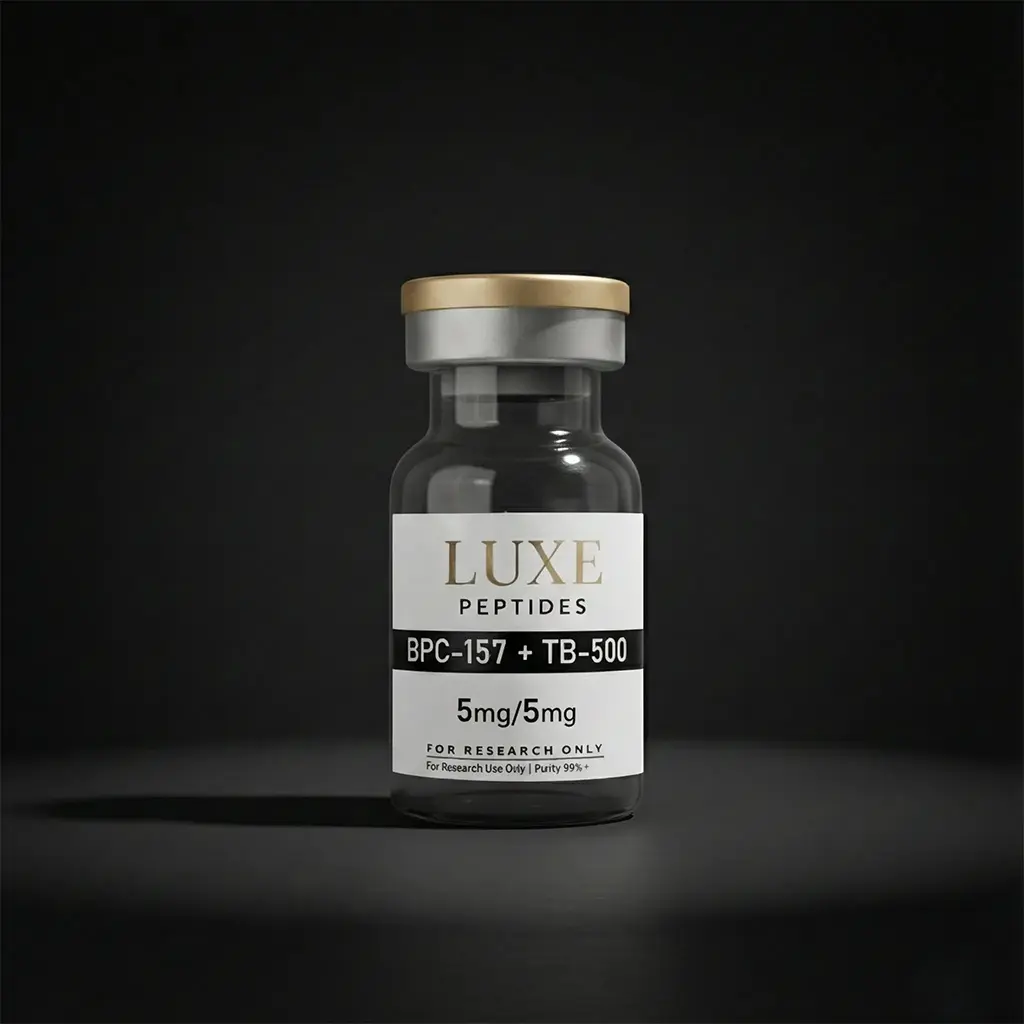
The BPC-157 + TB-500 Blend combines two widely studied peptides in a single lyophilized formulation. BPC-157 (Body Protection Compound-157) is a 15-amino acid gastric pentadecapeptide investigated for its interactions with angiogenesis, nitric oxide signaling, and growth factor receptor pathways. TB-500 is a synthetic fragment of Thymosin Beta-4, a 43-amino acid protein involved in actin sequestration, cell migration, and extracellular matrix remodeling. Together, these peptides have been combined for research examining their potential complementary activity in tissue biology models. BPC-157 has been studied primarily in the context of gastrointestinal and musculoskeletal tissue, while TB-500/Thymosin Beta-4 has been investigated in wound biology, cardiac tissue, and dermal repair models. The blend represents one of the most commonly researched peptide combinations in preclinical tissue signaling studies.
Mechanism of Action
The BPC-157 + TB-500 Blend has been investigated for the complementary mechanisms of its two components. BPC-157 has been studied for its upregulation of VEGFR2, interaction with the nitric oxide system, and modulation of the FAK-paxillin pathway in tissue remodeling. TB-500 (Thymosin Beta-4 fragment) has been investigated for its role in actin polymerization dynamics — it sequesters G-actin monomers, regulating cytoskeletal organization critical for cell migration. Researchers have also observed that Thymosin Beta-4 is associated with metalloproteinase regulation and anti-inflammatory signaling through NF-κB pathway modulation. Studies suggest that the combination targets distinct but overlapping pathways: BPC-157 through vascular and growth factor signaling, and TB-500 through cytoskeletal dynamics and extracellular matrix remodeling. In preclinical models, both peptides have been independently associated with collagen organization, making their combination a subject of interest in connective tissue biology research.
Published Research
BPC-157 Tissue Signaling
Seiwerth et al. (2018) reviewed BPC-157’s effects on blood vessel formation and tissue repair signaling across multiple preclinical models, establishing the vascular biology component of this blend [1].
Thymosin Beta-4 in Wound Biology
Malinda et al. (1999) investigated Thymosin Beta-4 (the parent protein of TB-500) in dermal wound models. Researchers observed accelerated wound closure associated with enhanced keratinocyte migration and angiogenesis at the wound site [2].
Thymosin Beta-4 and Cardiac Biology
Bock-Marquette et al. (2004) investigated Thymosin Beta-4 in murine cardiac models. Researchers observed that Thymosin Beta-4 was associated with activation of Akt/protein kinase B signaling and changes in cardiac cell survival parameters following ischemic challenge [3].
Product Specifications
| Product | BPC-157 + TB-500 Blend Lyophilized Powder |
|---|---|
| Available Sizes | BPC-157 5mg / TB-500 5mg, BPC-157 10mg / TB-500 10mg |
| Purity | ≥99% (HPLC verified) |
| Sequence | BPC-157: Gly-Glu-Pro-Pro-Pro-Gly-Lys-Pro-Ala-Asp-Asp-Ala-Gly-Leu-Val | TB-500: Ac-SDKP (N-terminal active fragment of Thymosin Beta-4) |
| Appearance | White lyophilized powder in glass vial |
| Storage | Store lyophilized at -20°C. Reconstituted solution at 2-8°C, use within 21 days. |
| Testing | Third-party tested — Certificate of Analysis available |
Frequently Asked Questions
This blend combines BPC-157 (a gastric pentadecapeptide) and TB-500 (a fragment of Thymosin Beta-4) in a single lyophilized formulation for tissue biology research.
BPC-157 is studied for angiogenesis and growth factor signaling, while TB-500 is investigated for actin regulation and cell migration. They target distinct but overlapping pathways in tissue remodeling.
Store lyophilized at -20°C. Once reconstituted, store at 2-8°C and use within 21 days.
TB-500 is a synthetic fragment of Thymosin Beta-4 containing the active region. The full Thymosin Beta-4 protein is 43 amino acids, while TB-500 represents the bioactive portion.
This blend is commonly studied in the context of tissue signaling, angiogenesis, collagen biology, actin dynamics, and nitric oxide pathways in preclinical models.
Yes, both BPC-157 and TB-500 (Thymosin Beta-4) are available as individual products for researchers who prefer separate compounds.
References
- Seiwerth S, et al. BPC 157 and blood vessels. Curr Pharm Des. 2018;24(18):1955-1969. PMID: 29756566
- Malinda KM, et al. Thymosin beta4 accelerates wound healing. J Invest Dermatol. 1999;113(3):364-368. PMID: 10469334
- Bock-Marquette I, et al. Thymosin beta4 activates integrin-linked kinase and promotes cardiac cell migration, survival and cardiac repair. Nature. 2004;432(7016):466-472. PMID: 15565145
Customer Reviews
Consistent quality across multiple orders. Very satisfied.
Purity exceeded expectations. Prompt delivery too.
Professional packaging, fast delivery, great product.
Fast shipping, well-packaged. Product quality is top-notch.
This vendor sets the standard. Highly recommend.
Five stars earned. Quality speaks for itself.
Best quality I have found. Quick turnaround on shipping.
Third order from Luxe — always reliable, always pure.
Third order from Luxe — always reliable, always pure.
Reordering because the first batch was flawless.
Purity exceeded expectations. Prompt delivery too.
Professional packaging, fast delivery, great product.
Very pleased with this purchase. Will be a repeat customer.
Fast shipping, well-packaged. Product quality is top-notch.
Fast shipping, well-packaged. Product quality is top-notch.
Happy with the product. Packaging could be improved slightly.
Product arrived fast and in perfect condition.
Great product. Arrived quickly and exactly as described.